

Silent Retreat: A Complete Beginner’s Guide (2026)
- What a silent retreat is — and how the different formats differ from one another
- What a silent retreat is like from the inside: day by day
- What results a retreat in silence can bring
- Who a silent retreat is not suited to (honestly)
- How to choose a silent retreat: criteria for a beginner
- The format of a deep silent retreat: how it works in practice
- FAQ — frequently asked questions
A silent retreat is neither a holiday nor psychotherapy. It is days without speech, news, social media, and often without eye contact. Why do people voluntarily immerse themselves in silence? And, more importantly — what happens to them by the fourth day of such an experience?
In this article we shall explore what a silent retreat is, how it unfolds day by day, what results to expect, and how to choose the right programme without making the wrong choice of format.

A silent retreat — a space to meet yourself
What a silent retreat is — and how the different formats differ from one another
A silent retreat is the practice of voluntarily refraining from speech for a period of one to ten or fourteen days. This field often conflates several quite different formats, and it is important to distinguish between them:
| Format | Roots and approach | Duration | Suited to |
|---|---|---|---|
| Vipassana | Buddhist roots. Rising at 4 a.m., austere conditions, no contact with the outside world. | 10 days | Experienced practitioners ready for an intensive experience |
| Mauna | A silence practice within a yoga retreat. Usually one day of stillness combined with gentle practices. | 1–3 days | Beginners and those wishing to try silence for the first time |
| Secular silent retreat | A contemporary approach: psychology, bodywork, and silence. No religious context. Led by psychologists or coaches. | 3–8 days | Burnt-out professionals, executives, and people struggling with anxiety |
What a silent retreat is like from the inside: day by day
Most articles paint an idyllic picture of “silence, peace and zen”. In reality, the emotional arc looks quite different — and it is important to be prepared for this:
| Day | What happens |
|---|---|
| Day 1 | Euphoria from the silence and novelty. At the same time, an odd feeling: your hand keeps reaching for your phone, unfinished conversations loop in your head. A first encounter with yourself. |
| Days 2–3 | Withdrawal and backlash. Boredom surfaces, followed by irritation and frustration with the organisers. An insistent thought arrives: “Why on earth did I come here? This was a mistake.” |
| Days 4–5 | Slowing down and the beginning of insights. The inner dialogue quietens noticeably. Unexpected, clear solutions to work and personal questions arrive — things that simply could not be heard amid the usual daily noise. |
| Days 6–7 | Lightness, clarity, and deep gratitude. You stop waiting for silence — you are the silence. Ordinary irritants no longer catch you, and energy is restored. |
💡 This is a perfectly normal arc — crying, feeling angry, wanting to leave, and then experiencing an extraordinary sense of uplift. At a good silent retreat, all of this is accepted and supported without breaking the vow of silence.
Nature becomes part of the practice: forest, water, and silence work together
What results a retreat in silence can bring
Without unnecessary mysticism — drawing on participant feedback and research:
- A reset for the nervous system. Information overload is exhausting, and deep silence allows the nervous system to recover, breathing to settle, and the body to relax. Many participants report a significant reduction in anxiety levels.
- The disappearance of “inner chatter”. That voice which endlessly comments, criticises, and replays events. A long-awaited quiet in the mind finally arrives.
- Clarity for decision-making. Silence brings answers to questions that could not be resolved amid the noise of the office and city. The space of silence generates ideas and brings clarity.
- Release of emotions and physical tension. Many feelings go unprocessed — we suppress them, distract ourselves. On a retreat you allow those emotions to surface, and in doing so give yourself the opportunity to release what has long needed to be let go.
- A new relationship with words. After a silent retreat, you begin to speak less but more precisely. Empty conversation no longer feels like a necessity.
Who a silent retreat is not suited to (honestly)
A retreat in silence is neither a panacea nor a magic pill. Moreover, in certain conditions it can cause harm.
- Active depression and suicidal thoughts. This is an absolute contraindication. First see a psychiatrist and psychotherapist — only then consider a retreat.
- Untreated anxiety disorders and panic attacks. Silence and inward focus can trigger a worsening of symptoms.
- Acute PTSD without therapeutic support. A silent retreat is not a substitute for therapy, but an additional tool — one that can only be used from a position of stability.
- Pronounced digital dependency. If you cannot manage without your phone for more than an hour and this causes genuine distress — start with one day of silence at home.
⚠️ Important: a silent retreat does not replace a psychiatrist or psychotherapist. First bring your mental health to a stable place with a professional — and then consider entering the silence.
How to choose a silent retreat: criteria for a beginner
What to look for when selecting a programme:
- Who is leading it. Is this a psychologist or coach with proper qualifications and experience? Or a “spiritual guide” with no name and no training? The difference is enormous.
- The format of silence. Complete or partial? Is there an opportunity to ask the facilitator a question, to discuss dreams and inner states? A daily group session is critically important for meaningful inner work.
- Digital detox. How is the handover of phones managed? Is it safe? Is there provision for emergency contact with the outside world?
- Accommodation and conditions. Single rooms or shared? Are there conditions for proper physical rest — a sauna, nature, the possibility of solitude?
- Reviews from real people. Look not for rapturous “everything was wonderful”, but for specific descriptions: what was difficult, how the sessions unfolded, what changes occurred in the weeks afterwards.
The format of a deep silent retreat: how it works in practice
A genuine silent retreat is not simply “spending a few days in quiet”. It is a carefully considered programme in which every element serves your outcome. To make this clearer, let us look at a concrete example of a high-quality retreat for those ready to do deep work.
One such programme is offered by the Narbuli retreat house in Latvia — the programme is called “The Silent Retreat. The Deep Reset”. Here is how the process is structured, and what to look out for when making your choice:
| Programme element | How it is structured | Why it matters |
|---|---|---|
| Format of silence | Eight days of complete silence and an information detox. Phones are handed to the facilitators. Fifteen minutes per day are available for emergency contact with loved ones. | Creates the depth at which genuine transformation becomes possible. You learn to be with yourself. |
| Work with a facilitator | A daily group session with a coach. Participants can share a dream, ask a question, or bring an inner challenge into the group. | In silence, what is usually drowned out begins to be heard. The sessions allow these states to be consciously lived through and transformed. |
| Embodied practices | Daily: dynamic meditation, mindful walking, forest bathing, sauna. | Tension leaves through the body, and lightness and groundedness emerge. This is a fundamental difference from simple rest. |
| Setting and atmosphere | The programme takes place in a forest, far from urban noise. Rooms are matched to each participant’s needs; each has its own character and atmosphere. | The space becomes supportive for personal work, not merely a place to sleep. |

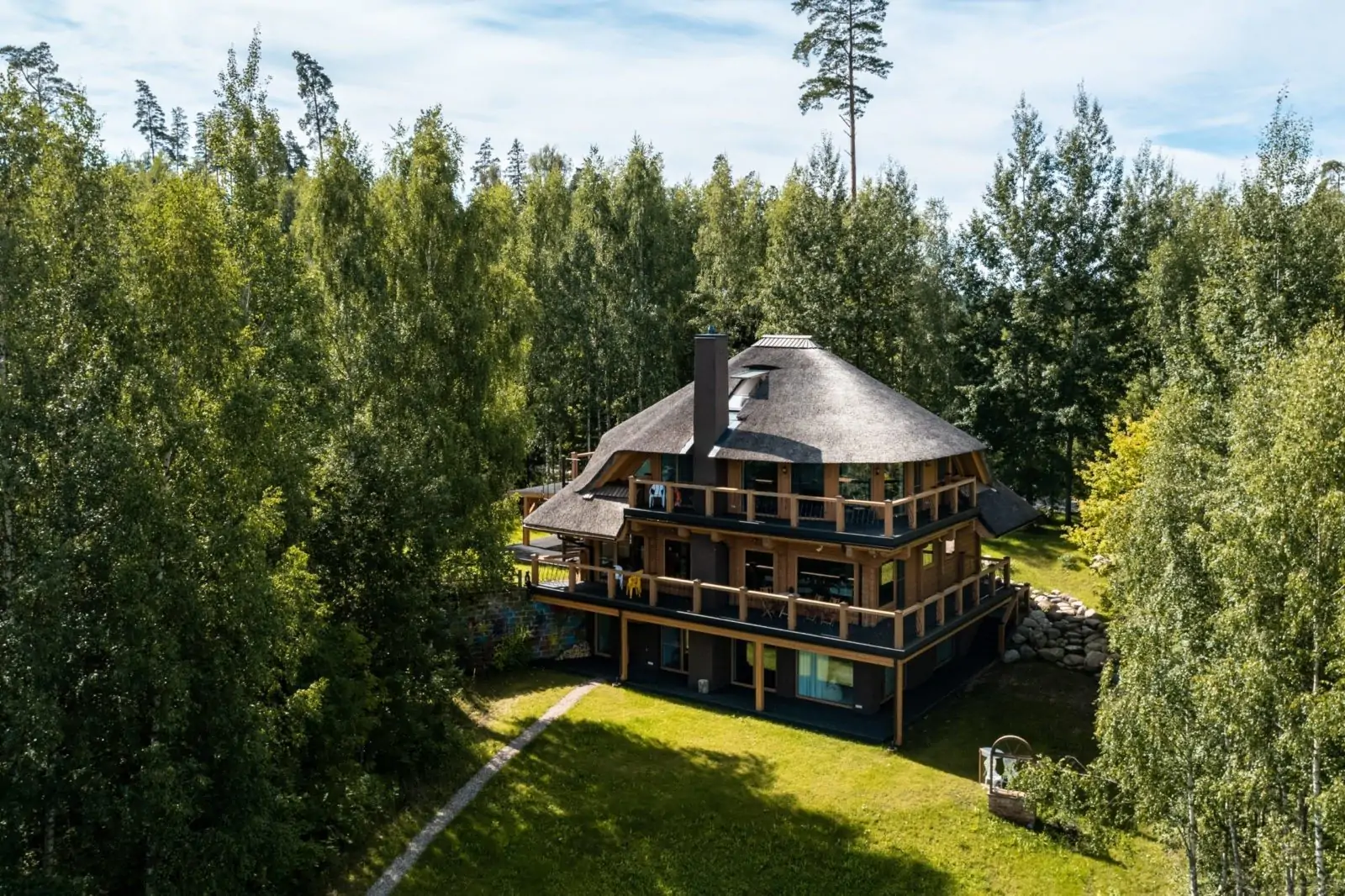
The Narbuli retreat house in Latvia — forest, silence, and a natural setting
FAQ — frequently asked questions
Conclusion and checklist
A silent retreat is not a fashionable challenge, not asceticism for its own sake, and not a magic pill. It is a powerful tool that requires awareness to use well. For some it is a path to long-awaited clarity, a reset, and a meeting with oneself. For others it is an unnecessary — or even uncomfortable — experience.
The most important thing is to choose it consciously, with a clear-eyed assessment of your mental state. Do not begin with lengthy, austere formats if you have never tried spending a day in silence. Start with a three-day programme — but in the right place, with experienced facilitators and a well-considered structure.