

Vipassana Silent Meditation Retreat: Traditional Course vs. Silent Retreat
Want to build a silent, vipassana-inspired retreat around your own pace? At Narbuli you can run one on your own, or with the support of our resident coach.
“Vipassana silent meditation retreat” describes two genuinely different experiences under one label: a fixed, traditional ten-day course taught free of charge, and a much broader range of shorter, paid silent retreats that borrow the name without following the original technique. Knowing which one you’re choosing changes what to expect entirely.

Vipassana, in its original sense, is a specific technique — not just any period of silence
What a vipassana silent meditation retreat actually means
Vipassana means “to see things as they really are.” It is one of the oldest forms of Buddhist meditation, taught in its best-known modern form by S.N. Goenka in the lineage of Sayagyi U Ba Khin. The technique has two stages: anapana, observing the natural breath to steady attention, followed by vipassana proper — systematically scanning the body and observing physical sensations without reacting to them, whether pleasant or unpleasant. The aim isn’t relaxation for its own sake. It’s training the mind to observe experience without craving or aversion, a quality traditionally called equanimity.
The word has drifted from that original meaning. In the wellness and retreat industry, “vipassana silent meditation retreat” is often used loosely for almost any retreat built around silence and inward attention, regardless of whether it follows the actual technique. Neither use of the phrase is wrong exactly — but they describe two different experiences, and it’s worth knowing which one you’re choosing before you commit any time to it.
What the research actually shows
Vipassana has a more substantial evidence base than most meditation styles marketed today, though it’s worth being precise about what the research does and doesn’t establish.
- Moderate, growing evidence. A 2025 systematic review covering studies published between 2010 and 2025 found moderate evidence that vipassana practice reduces stress, anxiety and migraine burden while improving mindfulness and several measurable markers of physical health — with the strongest effects in intensive retreat formats rather than casual practice.
- Measurable brain changes. Neuroimaging research links regular practice to increased grey matter density in regions associated with sustained attention, body awareness and emotional processing, alongside reduced reactivity in the amygdala — the brain’s threat-response centre.
- Lower cortisol, calmer nervous system. Regular practice is associated with lower cortisol via calmer activity in the stress-response system, and with improved heart rate variability — a marker of a more balanced nervous system.
- Evidence outside self-selected wellness seekers. A long-running vipassana programme inside a major Indian prison has recorded meaningful reductions in anxiety and depression among a genuinely non-self-selected population — useful evidence that the effect isn’t simply the comfort of a retreat setting.
- Real limits, stated honestly. The 2025 review’s authors flag small sample sizes in many included studies and call for more rigorous trials. What exists is a real, if still-developing, evidence base — not proof of a cure-all.
💡 The effects that show up most consistently in the research — lower reactivity, better emotional regulation, calmer physiology — are also the effects people report most often after even a short, well-structured period of silence, not only after the full ten-day course.
Noble silence and what a practice day involves
The single hardest part of a genuine silent retreat is rarely the meditation itself — it’s the sustained absence of conversation, distraction and the small social habits that normally structure a day. Most first-timers describe the first two or three days as the most difficult, followed by a settling that makes the remaining time feel very different from how it started.
The traditional ten-day course follows a strict structure: an early start, traditionally around 4am; up to ten hours of seated meditation across the day; and full noble silence from the evening of the first day until the final morning — no talking, no eye contact, no reading, writing, phones or exercise. Instruction is delivered through recorded discourse, with a teacher available for brief daily questions.
A properly structured silent retreat of any length tends to share a few of the same features: a genuinely enforced quiet period rather than a loosely-suggested one, a realistic proportion of the day spent in actual seated practice rather than filled with other programming, and a private, distraction-free space to be in when you’re not meditating. Shorter retreats that skip most of these in favour of comfort and sociability aren’t dishonest — but they’re a different experience from what vipassana originally describes.
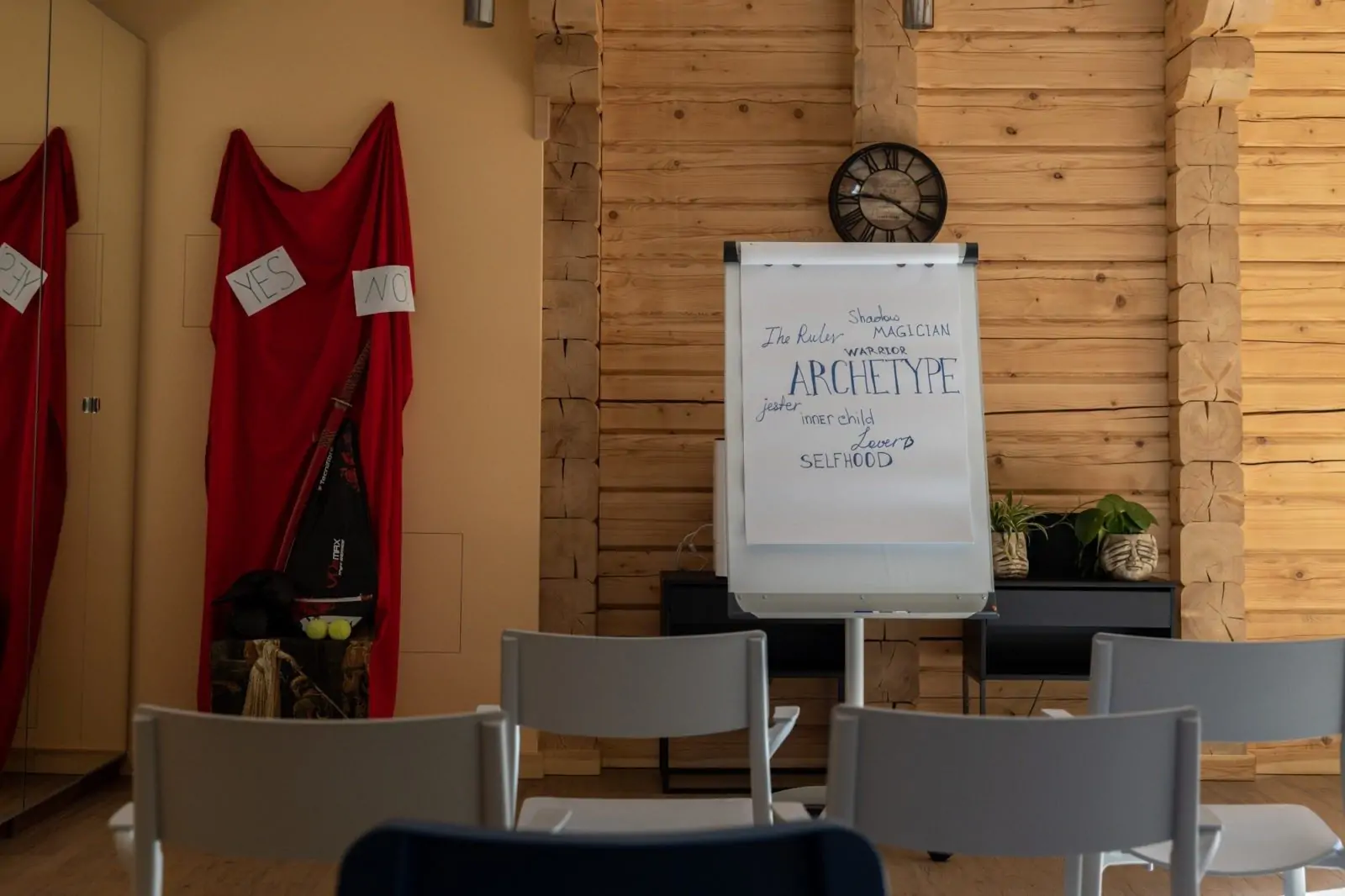
Silence creates the space — what surfaces in it is the actual work
The traditional course vs a self-directed silent retreat
Both routes are legitimate; they simply serve different needs. This comparison sets out the practical differences plainly.
| Traditional Goenka/Dhamma course | Self-directed or coach-supported retreat | |
|---|---|---|
| Cost | Free — donation only, after completion | Paid, venue and duration dependent |
| Duration | Fixed 10 days | Flexible — commonly 3 to 7 days, set by you |
| Technique | Strict Goenka method, taught by recorded discourse | Vipassana-inspired silent practice, shaped to your own pace |
| Silence | Full noble silence, enforced code of discipline | As much silence as you build into your own schedule |
| Setting | Purpose-built centre, monastic simplicity | A private, exclusive-use retreat house — you choose the pace |
| Best suited to | Those ready for a serious, structured first exposure to the actual technique | Those wanting a genuine period of silence and inward attention, on their own terms |
Choosing how to experience it: a practical checklist
Whichever route you’re weighing, the same underlying questions decide whether it actually works:
- Genuine silence enforceability. Ask exactly how silence is structured and for how much of the day — a vague “quiet atmosphere” is not the same as an enforced silent period.
- Realistic schedule. How much of the day is actually seated meditation versus other programming — this varies hugely between formats and operators.
- Exclusive use and seclusion. A venue shared with other guests changes the depth of the experience; ask whether the whole property is genuinely yours for the duration.
- Facilitator or coaching support, if included. Ask what training a facilitator has and how they work — structure and check-ins can support a silent retreat without undermining the silence itself.
- Aftercare and integration. A structured re-entry after a period of silence matters; ask what support, if any, is available once the silent period ends.
For the fuller picture on what makes a good venue beyond these vipassana-specific points, our retreat house guide covers the wider criteria, and our comparison of the best places to host a yoga retreat looks at the same questions for group-facing venues. If a broader solo reset interests you more than a strictly vipassana-style practice, our guide to solo wellness retreats in Europe covers the wider landscape.
Experiencing it at Narbuli — alone or with a coach
Narbuli Retreat House is built around exactly this checklist. Set on a forested hillside above a lake, with each of its nine rooms designed around its own quiet character, the whole property is taken on an exclusive-use basis — no other guests, no shared schedule, nothing to perform for anyone.
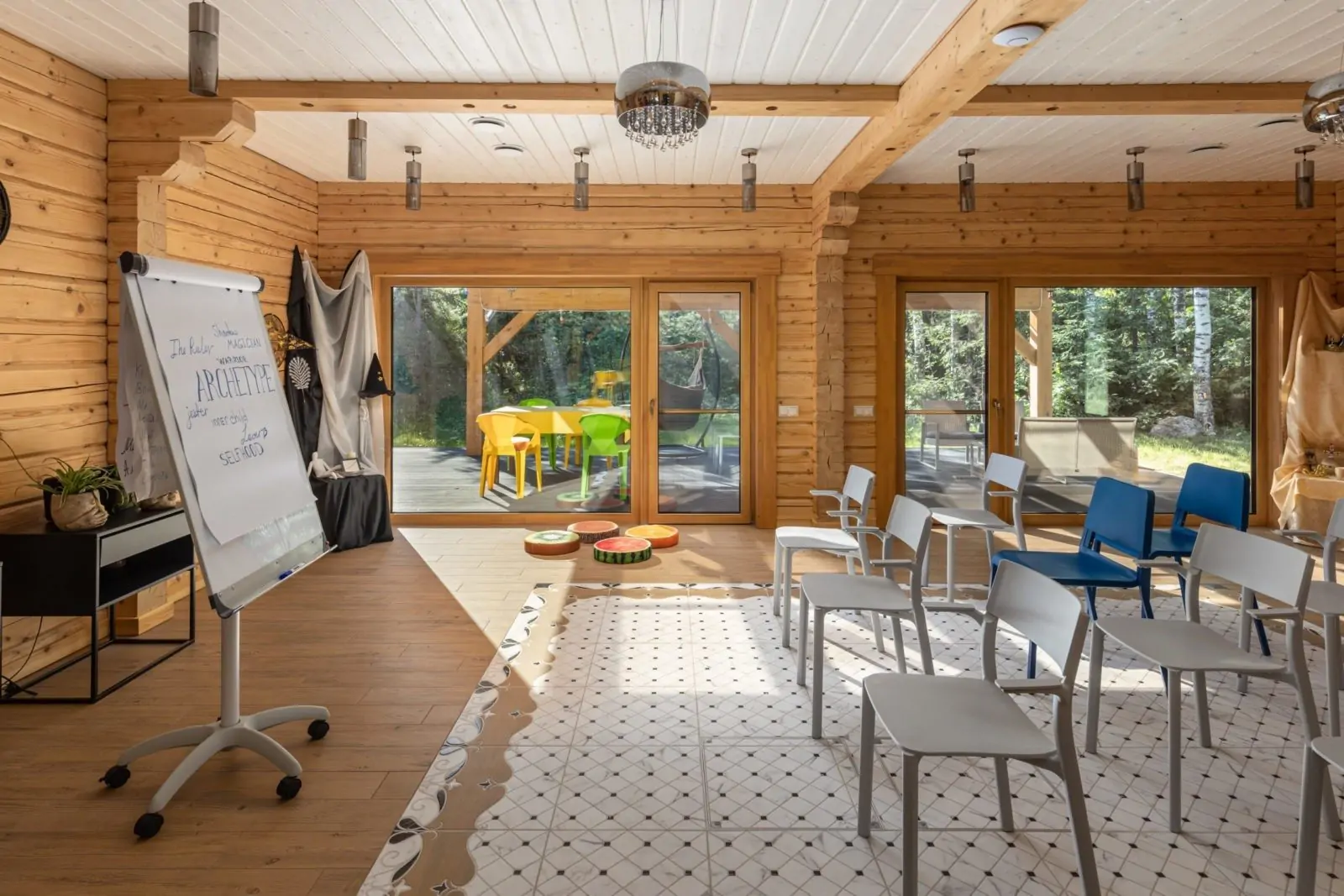
One of Narbuli’s nine individually designed rooms — built for solitude, not just for sleeping in
You can design and run a silent, vipassana-inspired retreat entirely on your own terms — setting your own sitting schedule, taking as much silence as you need, and using the forest itself as part of the practice. If you’d rather not structure it alone, Narbuli’s in-house coach can support you through the process, helping shape a programme suited to where you actually are rather than a generic one-size-fits-all schedule.
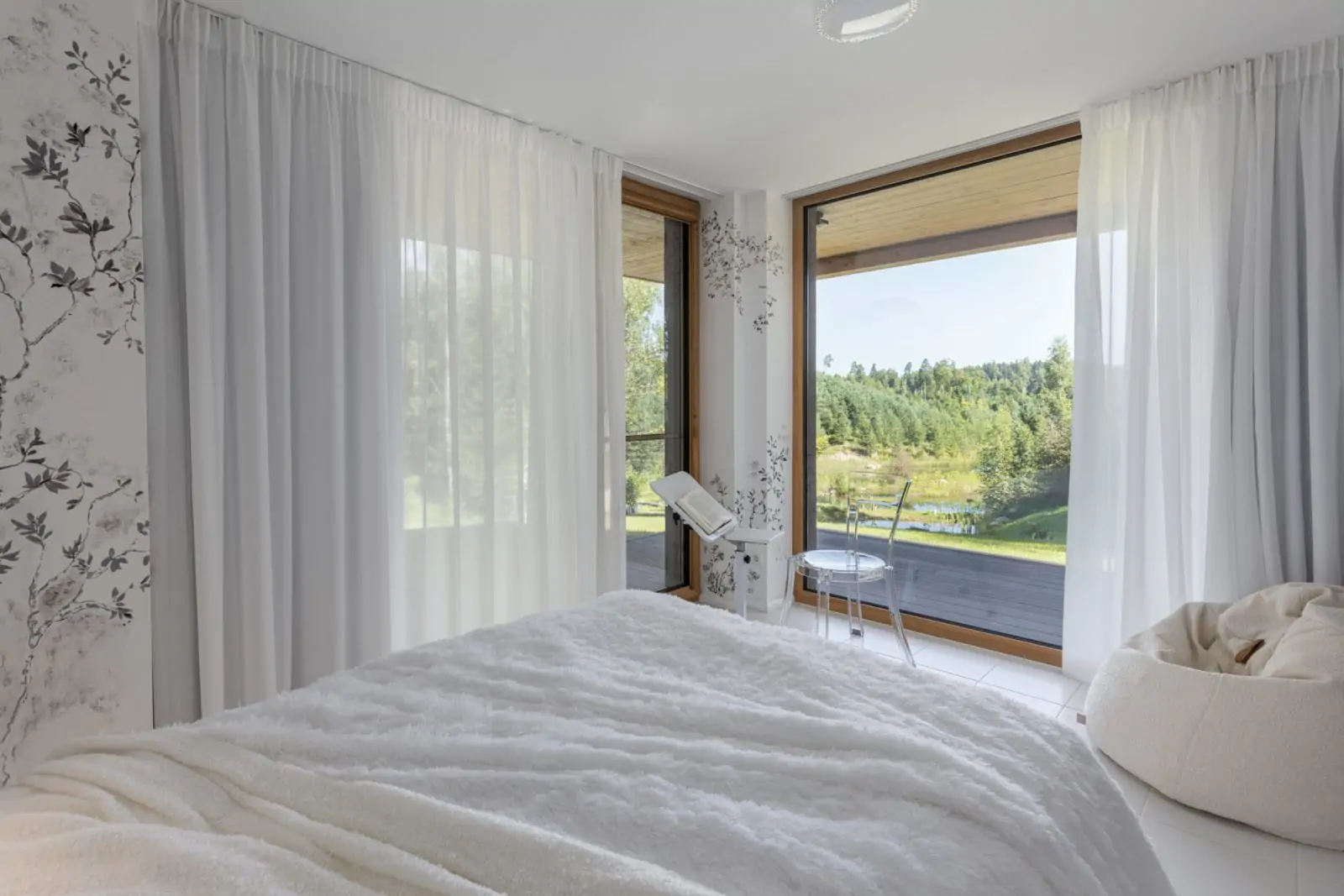
Real seclusion, direct forest and water access — the setting does part of the work
If you’re bringing a group rather than coming alone — a facilitator running their own silent retreat programme, for instance — our guide on how to host a retreat walks through the organisational side. Full details on hiring Narbuli exclusively are at retreatlatvia.com/en/host-a-retreat, and current rates for the house are listed on our retreat cost page.
🌲 A Dhamma hall provides silence by discipline. Narbuli provides it by design — genuine quiet, no passing traffic or other guests, and enough solitude to let the mind actually settle.
FAQ — frequently asked questions
Conclusion
A vipassana silent meditation retreat can mean two genuinely different things: the traditional, free, ten-day technique taught in the Goenka lineage, or the shorter, paid silent retreats the wellness industry has adopted the name for. Neither is the wrong choice — but knowing which one you are booking changes what to expect entirely.
Whichever route fits, the same checklist applies: real silence, a credible facilitator or structure, and honesty about which of the two you are actually getting.
Ready to experience it for yourself?
Plan a solo retreat at Narbuli and build a silent practice around your own pace — with or without the support of our resident coach.