

Team Away Day Ideas for UK Companies | Guide 2026
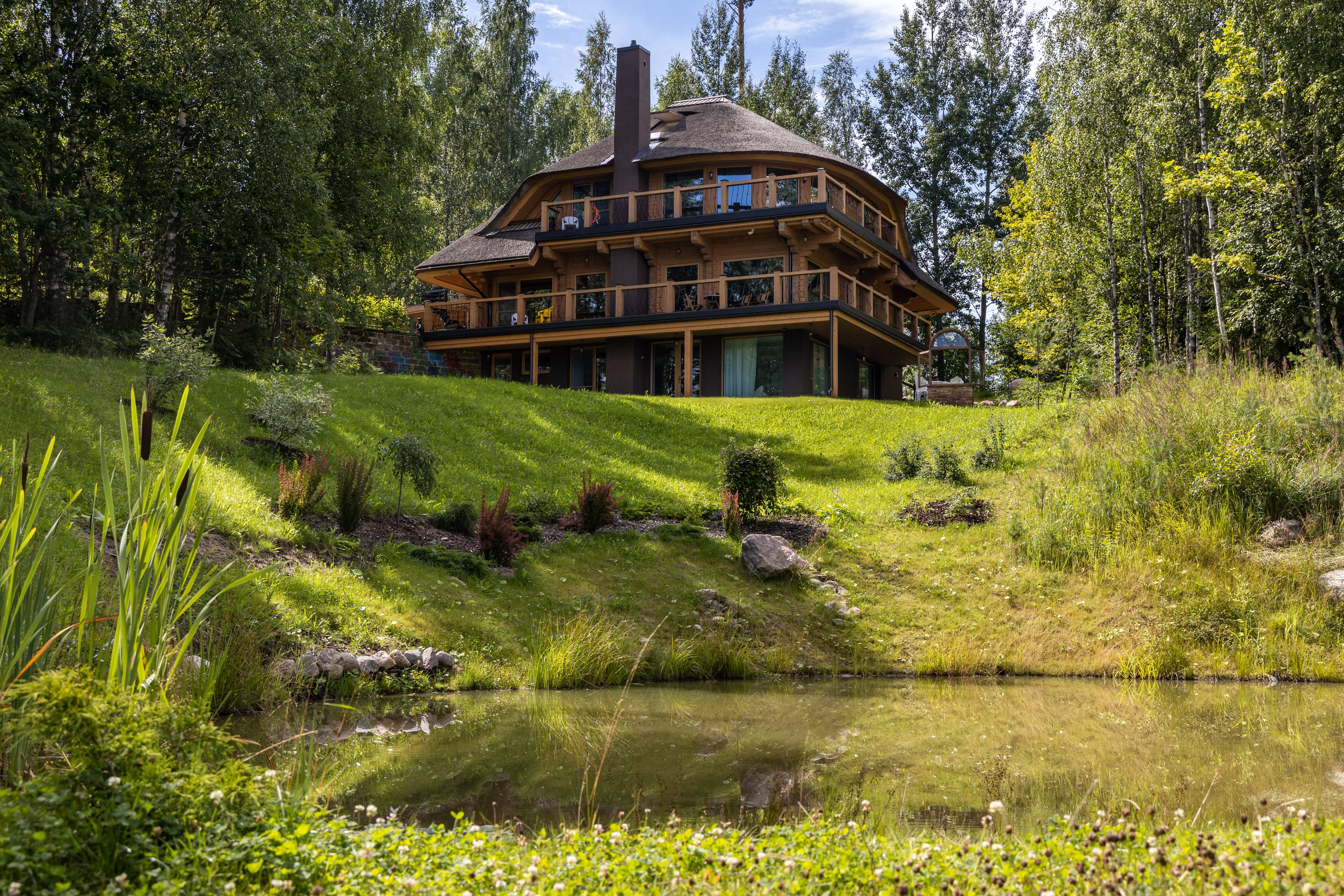
The real work happens when UK teams step away from the office and into an intentional space.
As a direct recommendation for UK teams: if your away day goal is purely celebration or reward, a full-day away day works perfectly. However, if your goal is to fundamentally change how your team thinks, collaborates, or works together — whether you’re based in London, Manchester, Bristol, or Edinburgh — you need at least one overnight stay. The informal dinner and breakfast that bookend a residential away day are where the real conversations happen and trust building takes root.
- Classic Away Day Ideas That Actually Work
- Away Day Ideas for Small Teams
- The Case for a Retreat Format
- Retreat-Format Away Day Ideas
- Away Day Retreat Venues — UK and Beyond
- How Much Does a Team Away Day Cost?
- How to Plan a Team Away Day Retreat
- FAQ — Ideas for Team Away Days
Classic Away Day Ideas That Actually Work for UK Teams
If you are at the initial planning stages and wondering “what shall we do for our team away day in the UK,” classic company away day ideas offer structured engagement. Here is an honest assessment of traditional UK team away day activities, organised by theme rather than just activity type.
Popular UK options include cooking classes, escape rooms in a dedicated independent venue (avoid generic chains), foraging and outdoor cooking in the British countryside, or pottery and craft sessions.
The Verdict: These share a tangible challenge with a visible result, which is great for team cohesion.
The Shortfall: They do not deliver strategic clarity or lasting shifts in team dynamics.
This category covers outdoor sports days, mini Olympics, seasonal wild swimming in UK rivers and lakes, axe throwing, and silent discos.
The Verdict: Exceptional for boosting team morale and breaking down corporate hierarchy for a day.
The Shortfall: Highly unsuitable for teams that need to address deep-seated operational issues or psychological safety.
Improv workshops, creative writing sessions, and hackathons fall into this bracket. In a hackathon format, you present a real business challenge, solve it in cross-functional teams, and present it back to the group — a format increasingly popular among UK tech and creative companies.
The Verdict: These edge toward genuinely useful strategic output while still feeling like an engaging team activity.
Volunteering as a team — such as habitat conservation work with UK charities, food bank support, or local community projects — or organising fundraising challenges like a charity hike across a UK national park or a sponsored cycle.
The Verdict: These corporate away day ideas work beautifully for UK teams that already possess strong cohesion and want to do something meaningful together. They work less well for teams with underlying trust problems.
Away Day Ideas for Small UK Teams (Under 12)
Smaller UK teams have a unique structural advantage because they can execute intimate, high-impact formats that larger groups cannot.
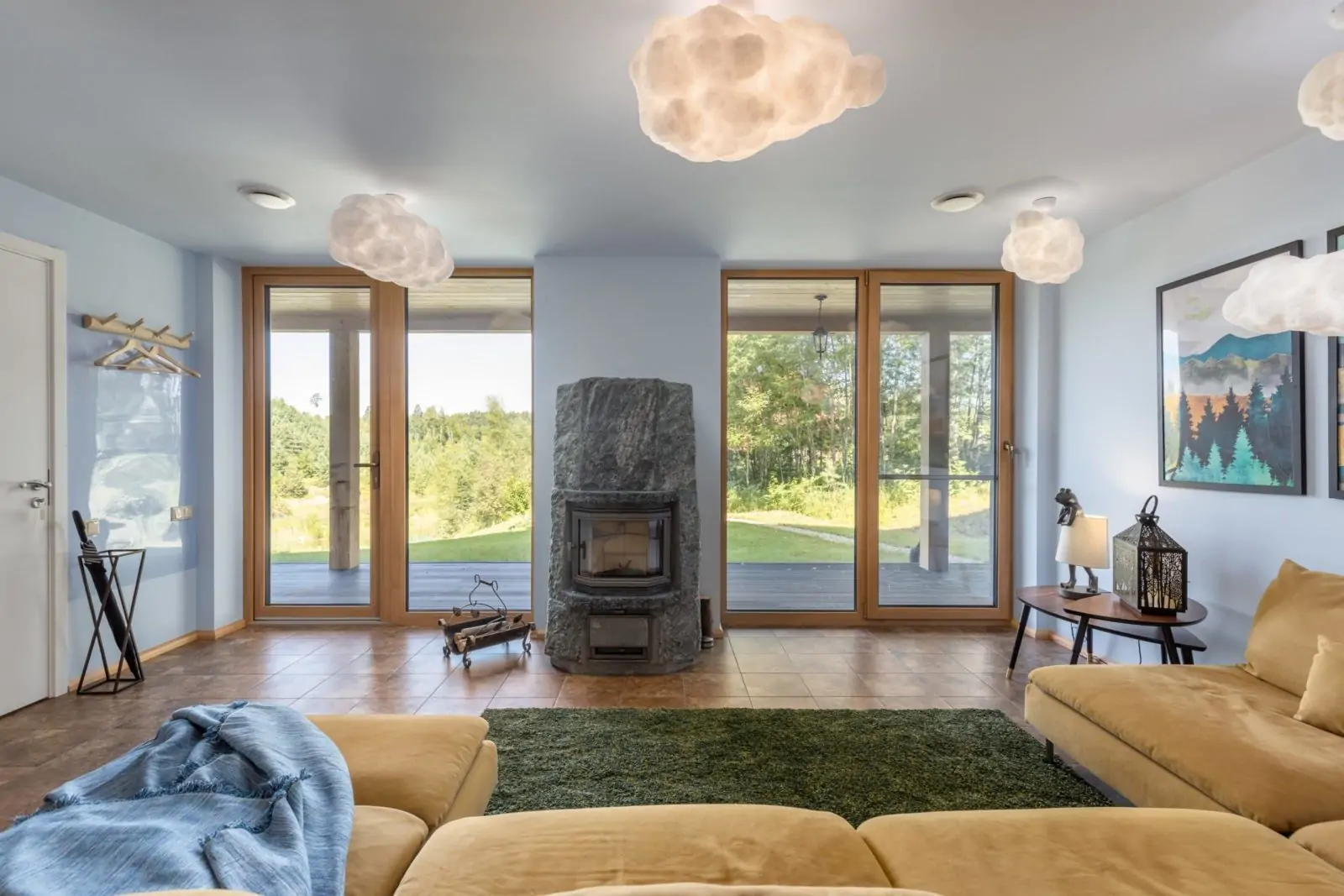
The living room — where the most important conversations of the retreat often happen.
When a Standard Away Day Isn’t Enough — The Case for a Retreat Format
While standard UK away day activities have their place, they reliably underdeliver in three critical scenarios:
- The team is burnt out, not just tired: A high-energy, packed activity day adds to the sensory load rather than reducing it. What burnt-out UK teams actually need is permission to slow down, not another thing to perform at.
- There is an unspoken issue in the team dynamic: Trust problems, communication breakdowns, or cultural drift will never get resolved in an escape room in Birmingham or a bowling alley in Leeds. They require dedicated space, skilled facilitation, and enough time for the real conversations to surface safely.
- The organisation is at a strategic inflection point: A new direction, an upcoming restructure, or a post-acquisition integration requires a team to think deeply together. A one-day activity in a UK hotel meeting room cannot produce this; you need at least a night away for a new strategy to become genuinely shared.
The business case for investing in depth is clear. Research by Deloitte found that 77% of employees have experienced burnout in their current role — a figure HR teams across the UK will recognise immediately. Conversely, data shows that teams operating with genuine connection and psychological safety experience lower turnover, better decision-making, and measurably higher performance. A UK team away day with a retreat twist — even just one overnight stay in an intentional environment — produces the kind of connection that changes how people work for months. An escape room simply cannot match that impact.
Retreat-Format Away Day Ideas for UK Teams — What This Actually Looks Like
To move away from vague “mindfulness sessions,” here are five concrete programme formats that a UK HR planner can confidently propose to a leadership team.
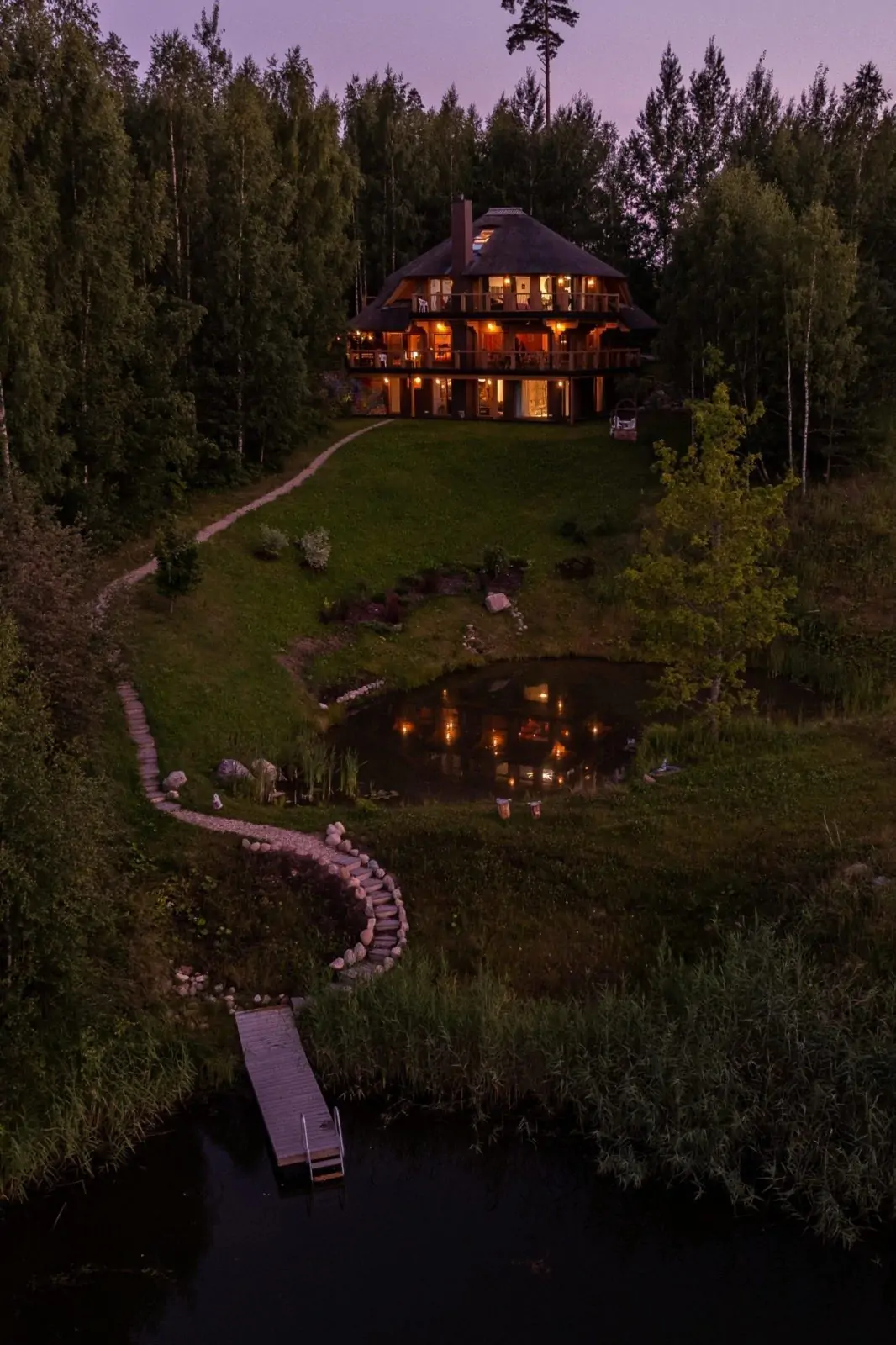
A forest retreat house — the environment itself becomes a facilitator.
Away Day Retreat Venues for UK Teams — UK and Beyond
When UK companies search for the perfect environment to host a residential away day, the physical space dictates the quality of the interactions.
What UK Teams Should Look for in a Retreat Venue
- Exclusive use: No other guests on-site. This is non-negotiable for deeper away day formats. The real breakthrough conversations happen at dinner, before breakfast, or during a stroll — moments that require total privacy. A UK hotel with public guests present creates a fundamentally different, guarded atmosphere.
- On-site accommodation for everyone: The overnight element is the point. Everyone sleeping in the same building creates the informal morning conversations over breakfast that change working dynamics.
- A non-corporate working space: Look for abundant natural light, room for the entire group to sit in a circle or around one large table, and direct outdoor access for breaks. Avoid the windowless conference rooms that characterise so many UK hotel venues.
- A setting that does the heavy lifting: A British forest, a rolling Somerset hillside, a Welsh estuary, or a Scottish working farm — the environment shapes the conversations in ways a standard conference hotel in Birmingham or Slough simply cannot.
UK Countryside Retreat Options
The Cotswolds, Somerset, and Wales: These regions form the most accessible countryside retreat belt for UK-based teams, situated roughly 90–150 minutes from London by car or train. Private houses and estates are widely available, including purpose-built sites and exclusive-use estates — making them a strong default for London and South East companies. Scotland and the Lake District: Ideal for UK teams that require genuine remoteness. While they demand more logistical effort to reach, they deliver a much stronger environmental effect that suits nature immersion and leadership formats perfectly. Norfolk and Suffolk: Flat, quiet, and coastal. Excellent for UK teams that find dramatic hills overstimulating, these regions boast a long heritage of retreat centre culture and are easily accessible from Cambridge, Norwich, and London.
European Options for UK Teams: Latvia and the Baltics
Boasting a direct flight time of just 2 hours and 20 minutes from London to Riga — comparable to driving from London to Scotland — this region offers stunning forest retreat houses within genuine ecological settings. Venue hire costs are typically 30–40% lower than equivalent UK properties, with exclusive-use estates available for groups of 6–15. For UK corporate teams seeking exceptional value, exclusive-use forest retreat houses here offer archetype-designed rooms, whole-property hire, on-site facilitation, and a natural environment that begins working on team mindset before the formal programme even starts.
Portugal & Italy
Portugal (Alentejo, Algarve): The most popular European destination for UK corporate retreat teams, featuring well-established infrastructure familiar to British travellers, warm weather from April to October, and private estate venues accommodating 12–30 people. Italy (Tuscany, South Tyrol): Perfect for UK teams where the setting itself needs to signal serious investment. These locations offer prestige environments and a world-class food culture for shared meals, commanding a higher financial budget but matching it in sheer quality.
Practical logistics for a European away day from the UK. Direct flights from London Heathrow, Gatwick, Luton, or Stansted to Riga, Lisbon, or Pisa are all under three hours — shorter than many UK domestic train journeys. ETIAS, the EU’s online travel authorisation for UK passport holders, is expected in late 2026 — an administrative step, not a visa, but worth confirming before booking. Many European retreat houses have extensive experience hosting UK corporate groups and can assist with airport transfers and catering to British dietary requirements.
How Much Does a Team Away Day Cost in the UK? — Honest Budget Guide
To help UK HR managers and Operations leads build a transparent business case, here is a breakdown of realistic cost ranges in GBP for corporate away days and retreats.
| Format | Typical Group Size | Duration | Approx. Cost Per Head (GBP) | What’s Typically Included |
|---|---|---|---|---|
| Half-day activity (UK) | 10–50 | 3–4 hours | £50–£150 | Venue space, specific activity, light catering |
| Full-day activity (UK) | 10–100 | 7–9 hours | £100–£350 | Venue hire, activities, lunch, evening drinks |
| Overnight residential (UK) | 8–25 | 1 night | £250–£600 | Exclusive venue hire, all meals, facilitated sessions |
| 2-night retreat (UK) | 8–20 | 2 nights | £450–£1,000 | Exclusive venue, all meals, external facilitation, full programme |
| 2-night European retreat (e.g., Latvia, Portugal) | 6–15 | 2 nights | £350–£750 (+ flights) | Exclusive venue, all meals, facilitation (budget flights from UK add ~£150pp) |
| Full-service facilitator | Any | Per day | £800–£3,000 | Expert design and delivery of the programme (excluding venue) |
Key Cost Drivers for UK Away Days: Budgets are driven primarily by venue standard and exclusivity, the facilitator’s experience level, and group size (since exclusive-use venues have fixed overheads, smaller UK teams naturally pay more per head). Seasonality also plays a massive role, with autumn and spring marking peak corporate demand in the UK — book early if you are targeting September/October.
Consider this useful comparison for UK companies: a standard full-day activity away day for a team of 20 people typically costs between £100 and £350 per head. A proper overnight residential retreat for that exact same team runs between £400 and £700 per head. The total budget difference is approximately £300 per person, or £6,000 for the team. The question every UK HR or People Lead must ask is whether that extra investment is worth it. For teams navigating a major strategic inflection point or experiencing high employee turnover — both common pressures in the current UK market — the answer is almost always yes.

A traditional sauna — part of the recovery infrastructure for burnt-out teams.
How to Plan a Team Away Day Retreat — Practical Steps for UK Organisations
Planning a retreat-format away day requires a different logistical approach than booking a local activity venue in your nearest UK city. Follow these seven sequential steps:
Define the one thing you want to be different when you return. Avoid broad goals like “better communication.” Aim for specific, measurable outcomes: “The three project leads who do not currently collaborate need to start working together,” or “The leadership team needs to align on our core strategic priority for Q3.” The more specific your core intention, the easier it is to design for — regardless of whether you choose a UK venue or travel abroad.
Choose the format based strictly on that intention. A single day does not provide the temporal buffer required for deep, vulnerable conversations. If your goals require psychological depth, commit to an overnight stay. Match the format to the goal long before you start browsing UK venue directories or activity lists.
Decide on facilitation. For complex strategy and leadership retreats, always hire an external facilitator. A skilled external professional creates a level of psychological safety that an internal UK manager simply cannot establish. For simple, morale-focused bonding away days, a confident internal host is perfectly fine. Budget for facilitation separately from venue costs — it is often the highest-leverage spend of the entire project.
Choose the venue for the environment it creates, not just its logistics. Ask yourself honestly: what will this physical environment do to how people feel? A beautifully converted rustic barn in Somerset will naturally evoke entirely different conversations than a sterile hotel meeting room in Milton Keynes or a corporate events suite near a UK airport.
Protect the informal time. The group dinner, the casual walk before breakfast, and the evening conversation around the fire circle are not the gaps between programme elements — they are the programme. Do not over-schedule your itinerary. Ensure at least 40% of the retreat time remains completely unstructured.
Communicate the intention clearly to the team. Do not just send out a rigid timetable via a calendar invite. Framing the trip as “We are going away for an overnight stay because we want to think differently about how we support each other and work together” lands completely differently than an automated email titled “Mandatory Away Day.” UK employees engage at a completely different level when they understand the core purpose.
Build in dedicated integration time afterward. A structured debrief conversation on the journey back, or a dedicated 30-minute follow-up session one week later, converts a great retreat experience into permanent operational change. Without this intentional loop, even the most inspiring UK team retreat memories will fade within a fortnight.
FAQ — Ideas for Team Away Days in the UK
Conclusion
Achieving that kind of lasting impact doesn’t require a massive budget or an exotic activity list — whether you’re planning a team away day in the UK countryside or considering a European retreat reachable by short-haul flight. It simply requires a format designed for genuine depth rather than speed, an environment that naturally creates the conditions for authentic connection, and a crystal-clear intention of what you want to be different when you get back to work. The ideas explored in this guide span the entire spectrum available to UK companies today. The most useful step you can take right now is to evaluate your team honestly, and decide exactly which format they need.
Looking for a Forest Retreat House in Europe for Your UK Team?
Narbuli Retreat House in Latvia offers forested hillside exclusivity, archetypal rooms, and direct flights from London and other UK airports — at a fraction of comparable UK venue costs. Perfect for UK leadership deep dives and creative resets.
What we offer


