

Best Detox Retreats in Europe (2026)
Looking for somewhere to have a detox retreat? Explore Narbuli — our retreat house in the forest.
A detox retreat is neither a diet plan nor a spa weekend. It is days without a phone, without the usual food and drink you reach for on autopilot, and without the low hum of notifications running in the background of everything. Why do people choose to switch all of that off at once? And, more to the point — what actually happens by the third or fourth day of doing so?
In this article we look at what a detox retreat is, how it unfolds day by day, what results to realistically expect, and how to choose the right programme without getting the format wrong.

A detox retreat — space to switch off, properly
What a detox retreat is — and how the different formats differ from one another
A detox retreat is a residential programme built around removing specific inputs — usually screens, and often alcohol, caffeine, sugar or processed food — for a defined number of days. This field often blurs several quite different formats, and it is worth telling them apart:
| Format | What it involves | Duration | Suited to |
|---|---|---|---|
| Digital detox retreat | No phones, no screens, no internet. Nature and quiet fill the space that notifications used to occupy. | 2–4 days | Anyone who feels controlled by their phone, or has lost the ability to sit with boredom |
| Detox cleanse retreat | A structured dietary reset — plant-based food, no alcohol, caffeine, sugar or processed food — alongside daily movement. | 3–7 days | Those wanting a physical reset, not only a digital one |
| Full detox retreat | Combines both: phones away and a food reset, plus daily group facilitation, movement and rest. | 5–8 days | People who are genuinely exhausted — mentally and physically — and want a proper, guided reset |
What a detox retreat is like from the inside: day by day
Most articles make it sound effortless — “switch off and relax”. In reality, the arc looks rather different, and it helps to know that in advance:
| Day | What happens |
|---|---|
| Day 1 | Relief mixed with restlessness. The phone stays in a box, but your hand keeps reaching for it anyway. The first meal without your usual coffee or sugar can leave you tired or slightly headachy — this is normal. |
| Days 2–3 | The dip. Irritability, low energy, and the unhelpful thought “I could just leave.” This is the withdrawal phase, digital and physical at once, and it passes. |
| Days 4–5 | Things settle. Sleep deepens, appetite normalises, and the compulsive urge to check something — anything — quietens. Clearer thinking starts to arrive. |
| Final days | A noticeable lightness. Food tastes different, silence stops feeling uncomfortable, and the phone, once returned, feels far less urgent than expected. |
💡 The middle-of-the-retreat dip is one of the most consistent things facilitators see — and one of the most important. It usually means the process is working, not failing.

Putting the phone away is the easy part — staying away from it is the practice
What results a detox retreat can bring
Without unnecessary promises — drawing on what guests consistently report:
- A reset for the nervous system. Constant notifications and stimulant-heavy diets keep the body in a low-grade state of alert; removing both allows genuine rest to finally register.
- Sleep that actually restores you. Without screens before bed and with regular, unprocessed meals, many guests report the deepest sleep they’ve had in months.
- A quieter relationship with food and screens. Not a permanent ban on either — a reset in how automatic the reaching-for-something has become.
- Mental clarity. Decisions and ideas that felt stuck at home often arrive unprompted once the noise — digital and dietary — is removed.
- Physical lightness. Steadier energy through the day, and less reliance on caffeine or sugar to get through an afternoon.
Who a detox retreat is not suited to (honestly)
A detox retreat is neither a medical treatment nor suitable for everyone. In some circumstances, it can do more harm than good.
- Anyone currently managing, or with a history of, disordered eating. A dietary reset of any kind should only be considered with a doctor or therapist involved — a retreat is not the right setting to navigate that alone.
- People on medication that requires a stable diet or routine — for example, some diabetes or blood pressure medication — should check with their GP before any structured food change.
- Anyone in active crisis, or managing a mental health condition without current professional support, should prioritise that support first. A detox retreat complements stability; it doesn’t create it.
- Pronounced anxiety about being uncontactable. If a few hours without your phone already causes real panic rather than mild discomfort, a shorter digital detox at home is a better starting point than a multi-day retreat.
⚠️ Important: a detox retreat does not replace a GP, dietitian or therapist. If in doubt, check with a professional before booking — a good retreat will encourage this, not discourage it.
How to choose a detox retreat: criteria for a beginner
What to look for when selecting a programme:
- Who is leading it. Is there a qualified facilitator, nutritionist or coach on-site — or is “detox” simply a marketing word attached to a nice building?
- What’s actually being removed. Phones only? Food too? For how long? The best detox retreats are specific about this rather than vague.
- How the phone handover works. Is it handled safely, and is there a clear way to be reached in a genuine emergency?
- The setting and the food. Real countryside or forest rather than a hotel garden; food that’s explained in detail, not just described as “cleansing”.
- Honest reviews. Look for accounts that mention the difficult middle days, not only the easy ones — that’s usually a sign the retreat is being described accurately.
The format of a deep detox retreat: how it works in practice
A genuine detox retreat is not simply “a few days without your phone”. It is a considered programme in which every element supports the reset. To make this concrete, here is an example of how a well-run retreat is actually structured.
One such programme is offered by the Narbuli retreat house in Latvia. Here is how the process is put together, and what’s worth checking for when comparing options:
| Programme element | How it is structured | Why it matters |
|---|---|---|
| Digital detox | Phones are handed to the facilitators for the full stay, with a short daily window available for emergency contact. | Removes the low-level pull of notifications so the rest of the reset can actually take hold. |
| Food | Plant-forward, seasonal meals prepared on-site, without alcohol, caffeine or processed food. | Supports the physical side of the reset without an extreme or restrictive protocol. |
| Facilitation | A daily group session with a psychologist-coach, alongside movement and breathwork. | Gives structure to what surfaces once the usual distractions are removed. |
| Setting | A forested hillside within the Amatciems eco-settlement, with a sauna, a glacial lake and forest trails directly from the house. | The environment does much of the work a detox programme depends on. |
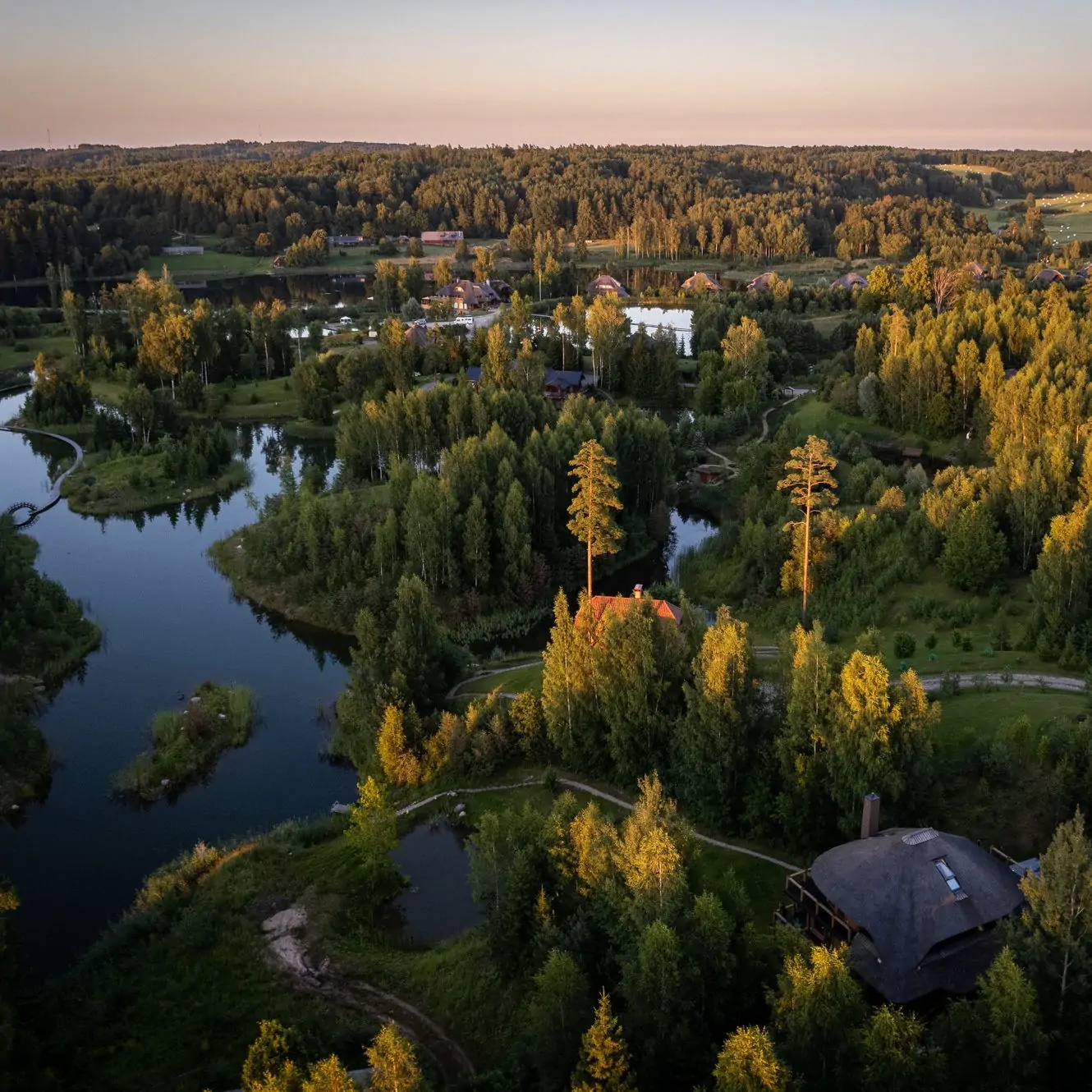
Narbuli Retreat House in Latvia — forest, quiet and a genuine reset
FAQ — frequently asked questions
Conclusion and checklist
A detox retreat is not a punishment, and it isn’t a shortcut either. It is a structured, guided way to remove — for a few days — the phone and the food habits that quietly run on autopilot, and to see what’s left once they’re gone. For some people that’s exactly the reset they need. For others, a shorter version at home is the better place to start.
The most important thing is to choose consciously: be honest about your starting point, don’t begin with the most intensive format available, and pick a retreat with real facilitation, not just an appealing photo.