Emotional Freedom Therapy (EFT Tapping): How It Works
Narbuli Retreat House stands above a lake in a Latvian forest village, around 50 minutes from Riga Airport. Tell us what you need, and we will help you choose a format.
- What is emotional freedom therapy?
- How does tapping work?
- The nine EFT tapping points
- How to do EFT tapping: a step-by-step routine
- What emotional freedom therapy can help with
- Does EFT tapping work? What the research says
- Is EFT recognised by doctors?
- EFT vs CBT vs EMDR
- Benefits and possible side effects
- How to practise: alone, with a practitioner or in a group
- FAQ
Emotional freedom therapy, better known as Emotional Freedom Techniques (EFT) or simply ‘tapping’, is a self-help method in which you tap lightly on a sequence of acupressure points while focusing on a feeling, memory or worry. People across Europe use it to reduce stress, anxiety and burnout, usually in addition to talking therapy.
The technique takes about an hour to learn. Its evidence base is still debated.
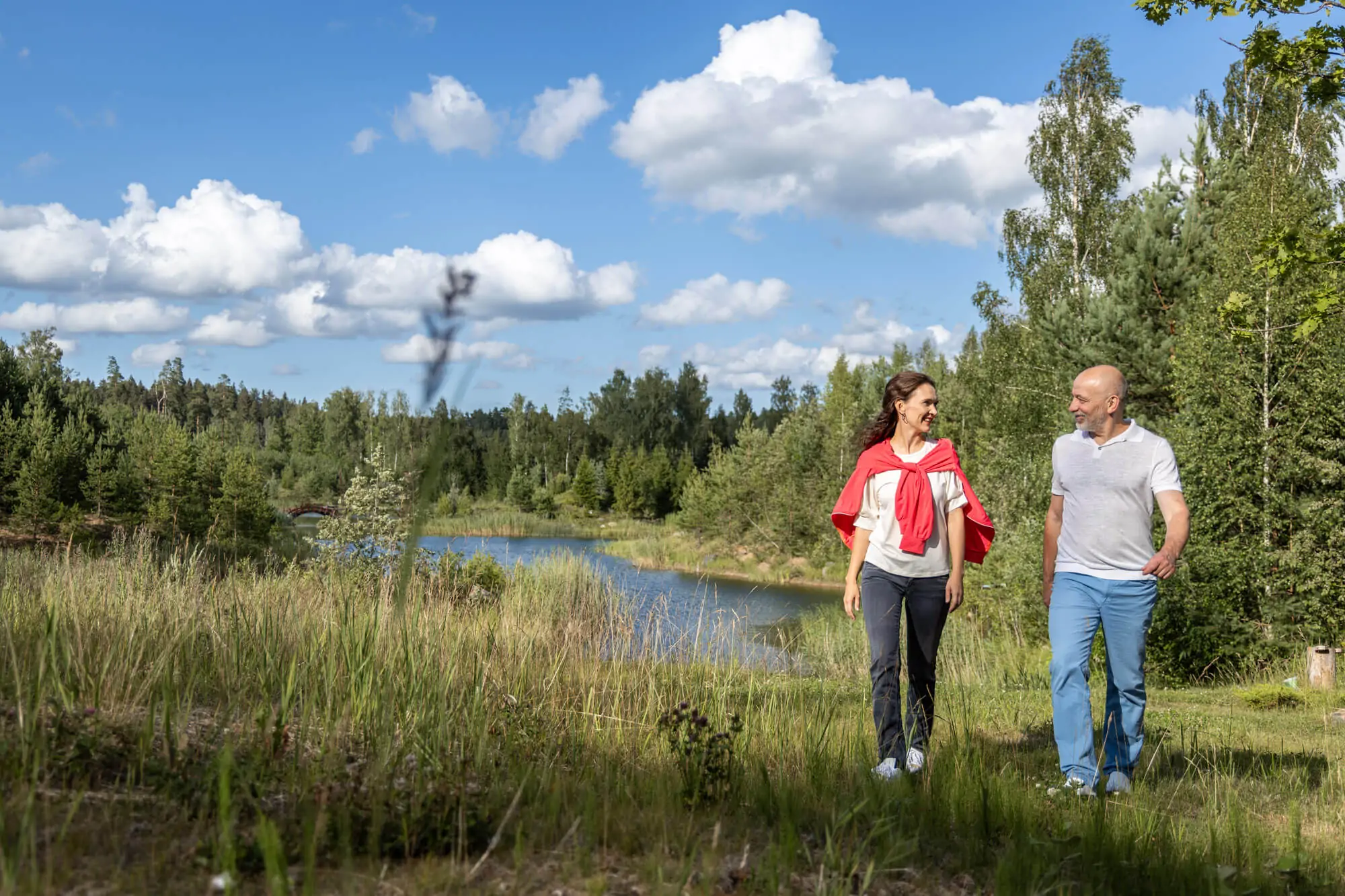
A quiet setting makes it easier to focus on one issue at a time
What Is Emotional Freedom Therapy?
Emotional freedom therapy is a mind-body technique that combines light fingertip tapping on acupressure points with focused attention on a specific problem. Practitioners usually call it Emotional Freedom Techniques, or EFT; the plural refers to the several methods it combines. Other names include tapping therapy and ‘acupuncture without the needles’.
A typical round takes less than a minute. You name what is bothering you, rate how intense it feels, then tap through a short sequence of points on the hand, face and upper body while repeating a phrase that keeps the issue in mind. Afterwards you rate the intensity again and repeat the round if needed.
A brief history
EFT grew out of Thought Field Therapy, a method developed by the American psychologist Roger Callahan in the 1970s and 1980s, which used different tapping sequences for different problems. In the 1990s Gary Craig, a Stanford-trained engineer, simplified the procedure into a single sequence anyone could learn and published it as EFT. Researchers later standardised his version as Clinical EFT, the form used in most published trials.
EFT tapping vs Emotionally Focused Therapy
Emotionally Focused Therapy, also shortened to EFT, is a form of couples and family psychotherapy rooted in attachment theory, and it involves no tapping at all. If a therapist lists ‘EFT’ on their profile, check which of the two they mean.
How Does Tapping Work?
The mechanism of tapping is not fully understood. The procedure has three components, each linked to known psychological methods.
- Exposure: the person holds a stressful memory or feeling in mind instead of avoiding it. Exposure is used in standard treatments for anxiety and phobias.
- Cognitive reframing: the setup statement pairs the problem with self-acceptance (‘Even though I feel…, I accept myself’). This element comes from cognitive behavioural therapy (CBT).
- Acupressure: tapping on points from traditional Chinese medicine provides physical stimulation while attention stays on the issue.
Proponents believe the combination reduces the fight-or-flight response. According to this hypothesis, tapping sends a calming signal to the amygdala, the brain region that detects threats, while the stressful thought is active. Over time the memory triggers a weaker emotional reaction. Several studies have recorded a fall in the stress hormone cortisol after a session, and some clinicians link the effect to activation of the parasympathetic nervous system.
The traditional explanation is that tapping clears blockages in the body’s energy meridians. There is no scientific evidence that meridians exist as physical structures, and critics argue that the measurable effects could come from exposure, relaxation and expectation rather than from the specific points. For this reason, many practitioners describe meridians as a metaphor and assess emotional freedom therapy by its results.
The Nine EFT Tapping Points
Standard EFT uses nine points, starting on the hand and finishing on the crown of the head. Tap with the tips of two or three fingers, firmly enough to feel it but never hard enough to hurt. Either side of the body works, and you can switch sides at any time.
- Side of the hand: the outer edge of the hand below the little finger, also called the karate chop point.
- Eyebrow: the inner end of the eyebrow, just above the bridge of the nose.
- Side of the eye: on the bone at the outer corner of the eye.
- Under the eye: on the bone directly below the pupil.
- Under the nose: the hollow between the nose and the upper lip.
- Chin: the crease between the lower lip and the chin.
- Collarbone: just below the inner end of the collarbone, next to the breastbone.
- Under the arm: on the side of the body, about 10 cm below the armpit.
- Top of the head: the centre of the crown.

The nine EFT tapping points on the hand, face and upper body
How to Do EFT Tapping: A Step-by-Step Routine
One full round takes around 30 seconds to a minute. Find a quiet spot where you will not be interrupted for ten minutes.
- Choose one specific issue. ‘Tension in my stomach before Monday’s presentation’ works better than ‘work stress’.
- Rate the intensity from 0 (none) to 10 (maximum) and note where in the body you feel it.
- While tapping the side of the hand, say the setup statement three times: ‘Even though I feel anxious about Monday’s presentation, I deeply and completely accept myself.’
- Tap points 2 to 9, about five to seven times each, while repeating a short reminder phrase such as ‘this presentation anxiety’.
- Rate the feeling again. If the score is above 2 or 3, do another round with adjusted wording: ‘Even though I still have some of this anxiety…’. If a different feeling or memory comes up, use it as the focus of the next round.
What Can Emotional Freedom Therapy Help With?
EFT is used for a wide range of problems, but the amount of research differs by condition. The most studied areas are listed below.
Anxiety and stress
EFT tapping for anxiety is the best-researched use of the method. Randomised controlled trials and meta-analyses report lower anxiety scores after EFT compared with waiting-list or no-treatment groups, and a 2022 systematic review in Frontiers in Psychology lists anxiety among the conditions with the most replication studies. Many people use a short round of tapping before exams, flights or difficult conversations.
Burnout
During the COVID-19 pandemic, tapping was promoted as a quick self-care tool for healthcare workers. A review published in PubMed Central describes it as easy to learn and capable of easing stress and burnout symptoms within minutes.
PTSD and trauma
EFT has been studied with war veterans, survivors of accidents and disasters, and other trauma-exposed groups. Researchers have proposed clinical guidelines suggesting around five sessions for subclinical symptoms and ten for diagnosed PTSD, with referral to intensive psychotherapy or medication when there is no response. Trauma should be worked on with a trained professional.
Phobias
One of the earliest controlled studies tested EFT on fear of small animals such as spiders and mice. Phobias suit the method well because the trigger is specific and easy to rate.
Physical pain, cravings and sleep
The evidence base also includes studies on chronic pain, insomnia, food cravings and weight management. These findings are more preliminary, so in these areas tapping is used as a supplement to medical care rather than a treatment in its own right.
Does EFT Tapping Work? What the Research Says
Studies show that tapping reduces subjective distress in many people. Researchers disagree about the mechanism and about how much of the effect is specific to EFT.
The case for
- The 2022 systematic review concluded that Clinical EFT meets the criteria for an evidence-based practice for anxiety, depression and PTSD, with further studies on pain, insomnia and weight. The review also notes that EFT is taught or used in mainstream health systems in several countries.
- One frequently cited trial reported a 24% drop in cortisol after a single hour of EFT. A later series of randomised trials at Bond University in Australia also found a significant short-term fall in cortisol, although participants’ own stress ratings fell less.
- Supporters note that improvement often appears within a few sessions and that the technique can be practised at home between appointments.
The case against
- Critics, summarised on Wikipedia, argue that EFT has no benefit beyond placebo and the proven psychological elements it borrows, such as exposure.
- In one dismantling study, tapping on random spots, or on a doll, reduced anxiety about as much as tapping the standard points. This suggests that focused attention and rhythm may matter more than the choice of points.
- Much of the positive research comes from researchers who also train EFT practitioners, and many trials are small.
Is EFT Recognised by Doctors?
EFT is generally classed as a complementary therapy. It is not part of the standard treatment protocols that doctors follow in most European countries, although some clinics, hospitals and wellbeing programmes offer introductory courses.
The British NICE guideline on PTSD (NG116) lists the clinical and cost effectiveness of EFT as a question for further research rather than recommending it as a treatment. For PTSD, the first-line options in European guidelines remain trauma-focused cognitive behavioural therapy and EMDR.
EFT vs CBT vs EMDR
All three methods ask you to engage with a difficult thought or memory rather than avoid it. They differ in how much the body is involved and in how firmly they are established in clinical guidelines.
| EFT (tapping) | CBT | EMDR | |
|---|---|---|---|
| What you do | Focus on an issue while tapping acupressure points and repeating a phrase | Identify and challenge unhelpful thoughts and behaviours | Recall a traumatic memory while following side-to-side eye movements, sounds or taps |
| Role of the body | Central: tapping on set points | Minimal | Bilateral stimulation |
| Usual format | Self-help, one-to-one or group sessions | Course of weekly sessions with a therapist, plus homework | Sessions with a specially trained therapist |
| Status in clinical guidelines | Complementary; recommended for further research | First-line treatment for anxiety and depression | Recommended for PTSD |
| Can you practise alone? | Yes, for everyday stress | Partly, with workbooks and apps | No |
Some psychologists and counsellors combine tapping with CBT or other talking therapies within the same session.
Benefits and Possible Side Effects
Advantages of EFT tapping:
- No medication and no invasive procedures
- Can be learnt in one session and used anywhere
- Free when practised on your own
- Can be used at the moment stress rises
- Compatible with therapy and medication
Side effects of EFT tapping
Few physical risks are known. Emotional reactions are more common. Some people feel a temporary surge of emotion, cry during a round, feel tired afterwards or find that older memories surface. Tapping too hard can leave the points tender. Stop and seek support from a professional if a session leaves you more distressed than when you started, if you are working with trauma, or if you have a diagnosed mental health condition.
How to Practise: On Your Own, With a Practitioner or in a Group
On your own
Self-help tapping is suitable for everyday stress, nerves before an event or low mood after a difficult day. Write down the issue and the scores before and after each round. Free guides from organisations such as EFT International explain the basics.
With a practitioner
For long-standing anxiety, phobias or trauma, work with a trained specialist. Check for accreditation from a recognised EFT body and, ideally, a background in psychology, psychotherapy or counselling with a licence to practise in their country. Ask how they work with strong emotions, how many sessions they usually recommend and whether they combine EFT with other methods. Many practitioners work online, so language and approach matter more than location. Prices vary between countries and practitioners.
In a group or on a retreat
In a group, beginners learn the sequence faster and practise more regularly. Some facilitators include EFT in longer programmes together with breathwork, meditation and time outdoors, outside the usual daily environment.
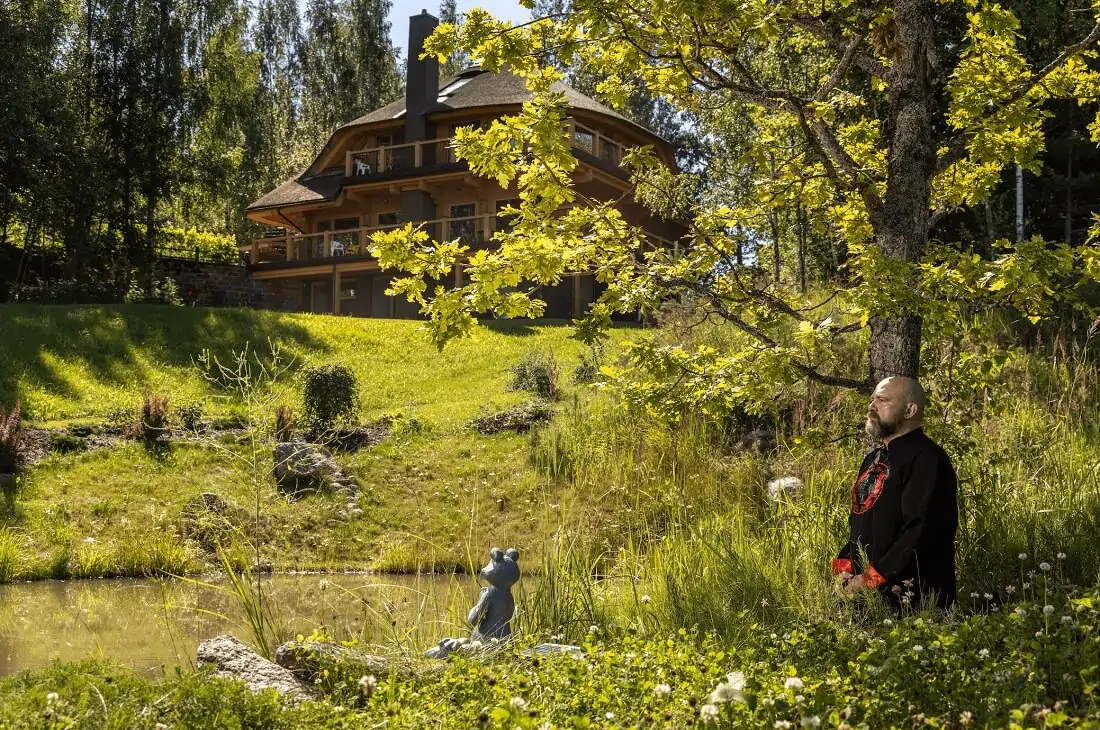
Narbuli Retreat House, Latvia
Practising EFT on a Retreat in Latvia
Narbuli Retreat House is a retreat venue in Amatciems, in the Latvian countryside, that hosts group programmes of this kind. It is around 80 km from Riga and roughly a 50-minute transfer from Riga airport. Riga has direct flights from most European capitals. The house has nine guest rooms for up to 12 participants and a 48 m² practice hall for tapping circles, meditation or movement sessions. Facilitators can book the whole house for a private programme, while individual guests can reserve a single room. The house is in a quiet rural area, away from city noise. Details and booking options are available on the website of our retreat venue in Latvia.

Narbuli Retreat House in Amatciems, Latvia
Frequently Asked Questions
Conclusion
Emotional freedom therapy combines exposure, self-acceptance and acupressure. One round takes a few minutes and requires no equipment. Research suggests it can ease stress and anxiety for many people, though questions remain about how much the specific points matter.
The method is suitable for everyday tension. For trauma or conditions that affect daily life, a qualified professional is needed.
Sources
- Clinical EFT as an evidence-based practice: a systematic review, Frontiers in Psychology, 2022
- Emotional Freedom Technique (EFT): Tap to relieve stress and burnout, PubMed Central
- Guidelines for the Treatment of PTSD Using Clinical EFT, Healthcare, 2018
- NICE guideline NG116: recommendations for research
- Emotional Freedom Techniques, Wikipedia
- What is EFT tapping?, EFT International
Tell us about your group or what you are looking for. We will suggest dates, rooms and a format, whether you need the whole house for a programme or a single room for a few quiet days.
What we offer