Private Group Wellness Retreats: Planning Guide & Costs
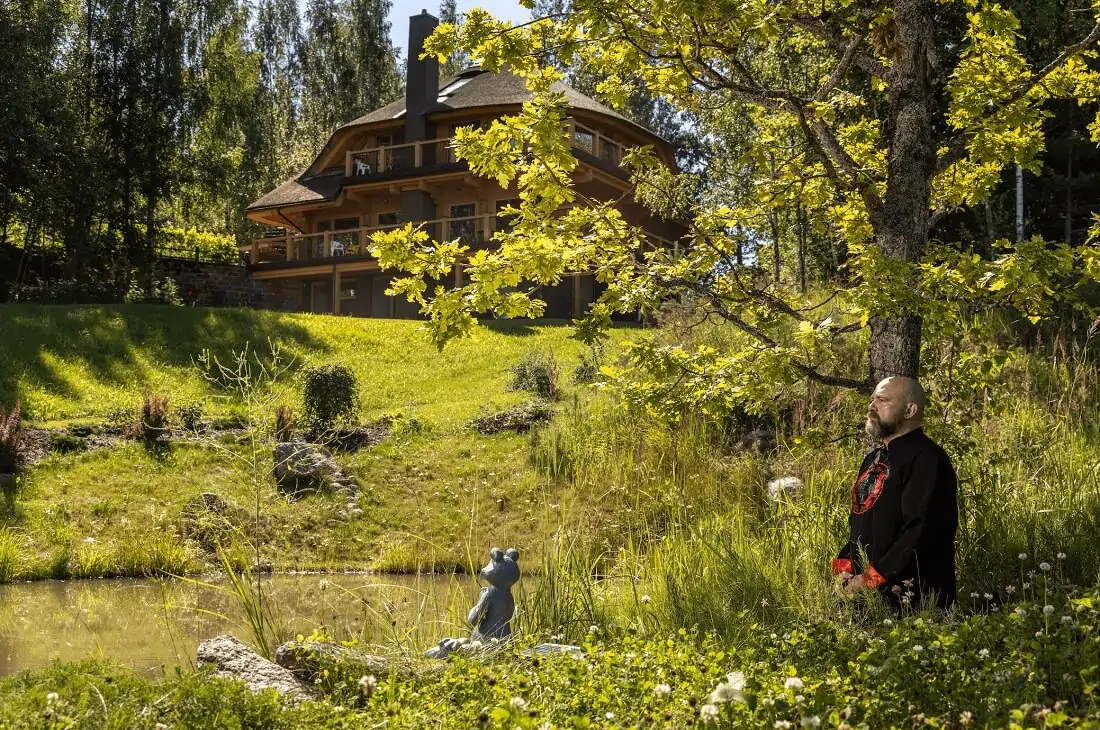
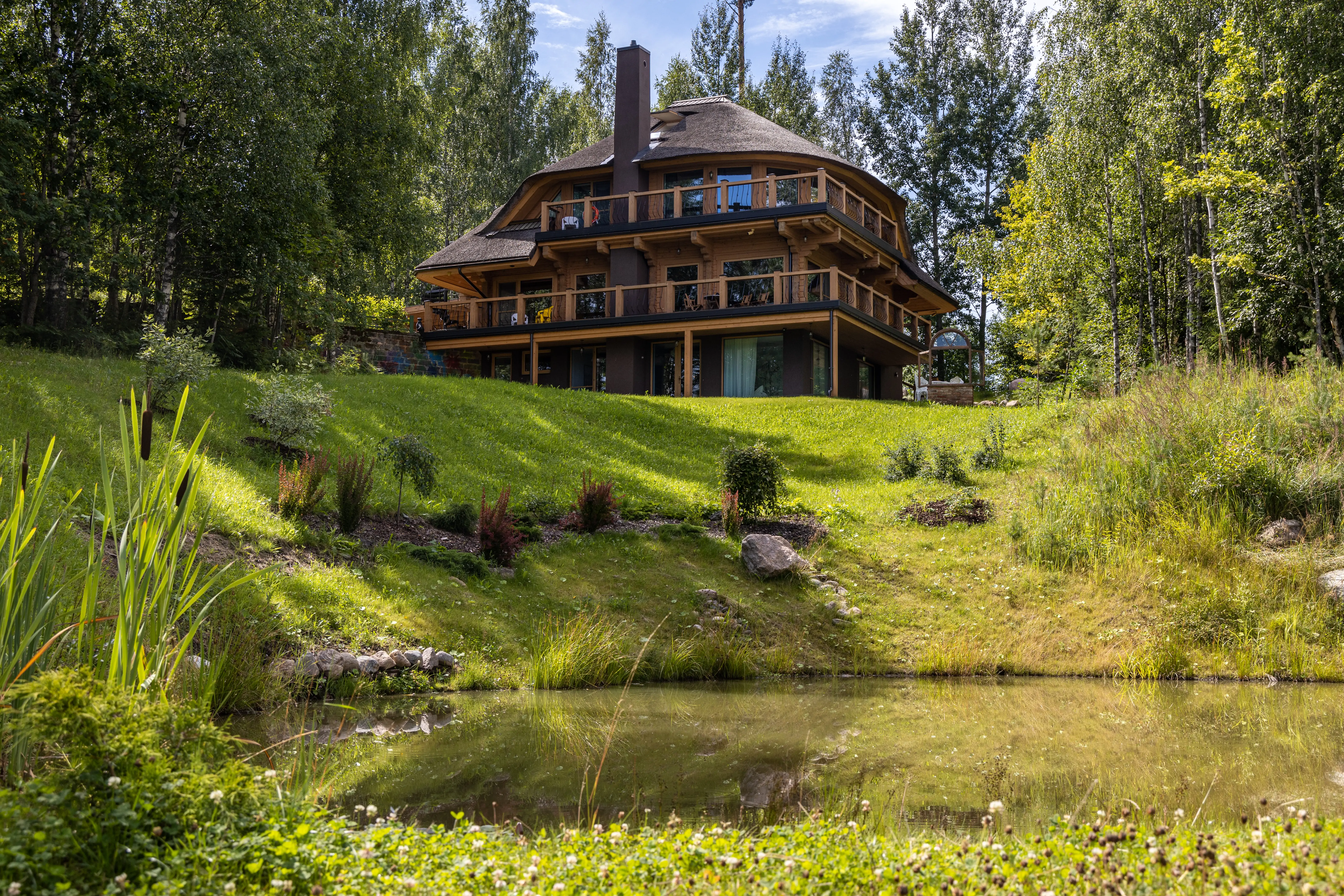
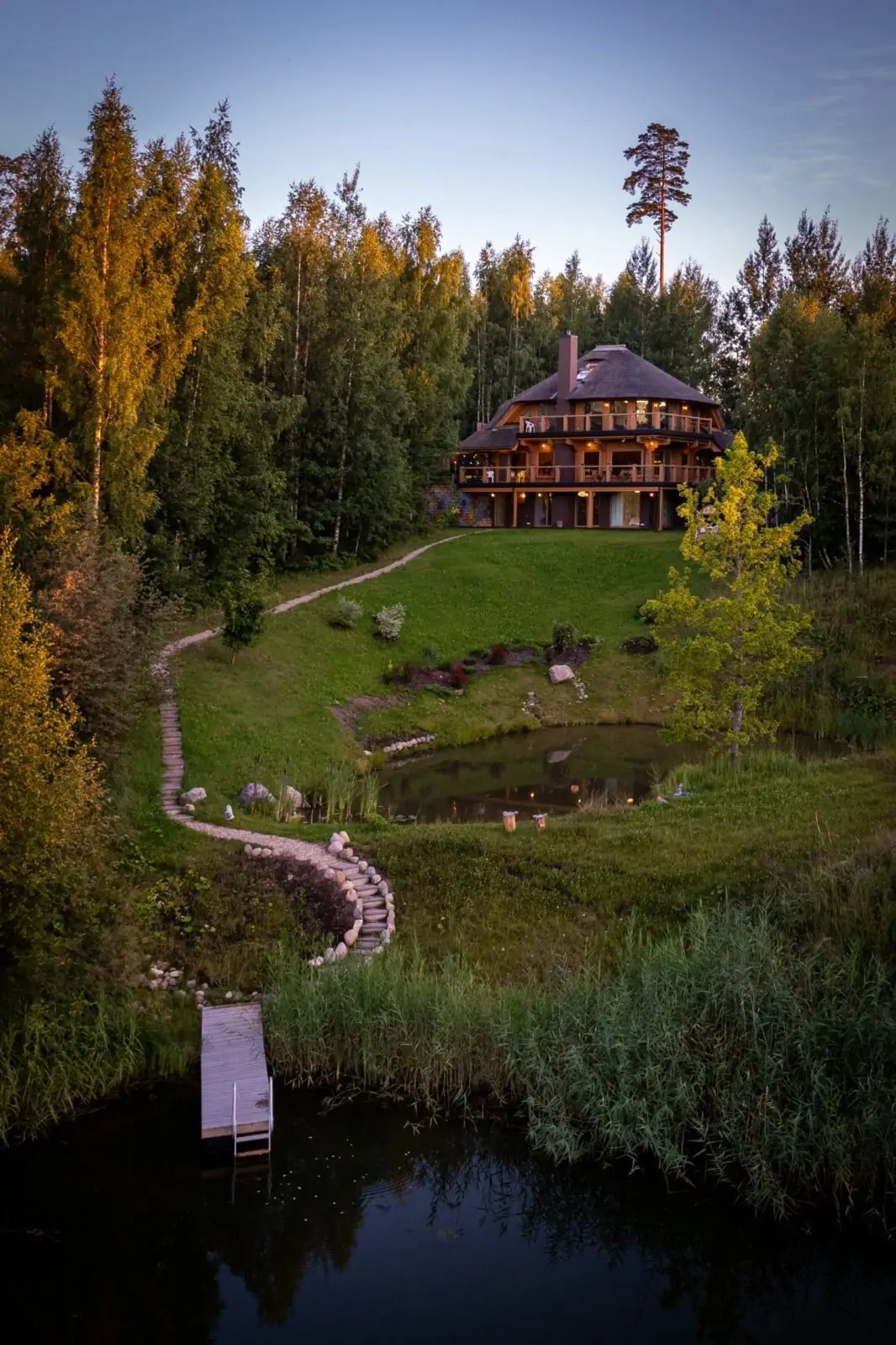
Narbuli Retreat House in Latvia has 9 rooms for up to 12 participants and a practice hall that is yours alone. It stands above a lake in a forest village, around 50 minutes from Riga Airport. Tell us your dates and group size, and we will check availability.
Private group wellness retreats give one group of people a venue, a schedule and a programme built around them alone. Instead of joining strangers on a fixed itinerary, you book the whole place — bedrooms, practice hall, sauna, kitchen — and decide how the days unfold.
That might mean sunrise yoga and long lunches for a circle of friends, a quiet reset for a family spread across three generations, or a leadership team stepping away from screens for a few days. The format suits anyone who wants rest without a crowded spa or a rigid timetable. It also asks more of the organiser: the right venue, a realistic budget and a programme that works for everyone in the group.
What Is a Private Group Wellness Retreat?
A private group wellness retreat is a retreat where your group has exclusive use of the venue and the programme is shaped around your needs. Nobody else sleeps in the rooms, uses the practice space or joins your sessions.
There are two common formats:
- Fully organised (bespoke) retreats. The venue or a retreat planner arranges everything: accommodation, meals, teachers, therapists and activities. You agree the programme in advance and simply arrive.
- Venue hire. You book the space on an exclusive-hire basis and bring your own programme, along with your own yoga teacher, facilitator or coach. This suits retreat leaders and groups who already know what they want.
| Private group retreat | Open-group retreat | |
|---|---|---|
| Who attends | Only the people you invite | Individual guests who book separately |
| Programme | Built around your group’s goals | Fixed in advance by the host |
| Dates | Chosen by you, subject to availability | Set by the organiser |
| Privacy | Exclusive use of the venue | Shared spaces with other guests |
| Pricing | Usually quoted for the whole group or venue | Priced per person |
| Flexibility | High: timings, meals and activities can change | Low to moderate |
Who Private Group Retreats Are For
Groups of friends and families
Milestone birthdays, reunions and family gatherings often work better when everyone sleeps under one roof and nobody has to compete with neighbouring tables. Multi-generational groups gain the most. Grandparents can take a gentle morning walk while others join a more demanding class, and everyone meets again for dinner.
Retreat leaders and yoga teachers
For yoga teachers, Pilates instructors and wellbeing practitioners, venue hire turns a retreat idea into a working product. Exclusive use means the teacher controls the timetable, the atmosphere and the guest list. The venue takes care of rooms, meals and logistics. See our page for hosting your own retreat.
Corporate teams
Leadership retreats and company offsites increasingly include a wellness element: morning movement, breathwork, time outdoors and a genuine digital detox. A private venue removes distractions and makes honest conversations easier. That is hard to achieve in a city hotel with another conference group down the corridor. More on a corporate retreat format.
Celebrations with a wellness twist
A hen weekend or a birthday doesn’t have to mean late nights and sore heads. Many groups now plan a slower version: yoga in the morning, a sauna session in the afternoon, a long dinner and an early night by choice.
Benefits of Booking the Whole Venue
- Privacy. No strangers in the sauna, at breakfast or in the practice hall. Groups relax faster when they aren’t performing for an audience.
- Control over the schedule. Sessions can start later after a long evening, run on when the group is engaged, or give way to a walk when the weather turns.
- Food that suits everyone. With full-board catering or a private chef, dietary requirements are planned once for the whole group rather than negotiated at every meal.
- A shared space for practice. A dedicated hall or studio means yoga, meditation and workshops don’t depend on borrowing a function room.
- Stronger group dynamics. People who arrive together tend to leave closer. Time spent cooking, walking and sitting by the fire matters as much as the formal programme.
- Clearer costs. One quote for the venue, meals and activities makes the budget easier to split and manage.
What to Look For in a Wellness Retreat Venue
The venue shapes a retreat more than any single session. Before you book, check each of the following.
- Capacity and room layout. Count beds, not just rooms. Ask how many private rooms and en-suite bathrooms there are and whether anyone will need to share. A house that sleeps up to 12 guests may suit a group of eight better, giving everyone room to spread out.
- A dedicated practice space. Look for a yoga studio or practice hall with natural light, good ventilation and enough floor space for every mat at arm’s length. Ask for the floor area and how many mats fit comfortably.
- Wellness facilities. A Finnish sauna, hot tub or cold plunge adds a great deal to the programme. Access to a lake, the sea, forest or open countryside matters just as much: wild swimming, forest bathing and mindful walks cost nothing extra.
- Catering options. Decide between fully catered stays, a private chef and self-catering. Confirm that the kitchen can handle your dietary requirements and ask whether meals use local, seasonal produce.
- Practitioners. Some venues work with trusted practitioners such as yoga teachers, massage therapists and sound bath facilitators. Others are a blank canvas where you bring your own. Check which applies and whether outside practitioners pay a fee.
- Location and transfers. Work out the total door-to-door time, including the transfer from the nearest airport or railway station. Seclusion is part of the appeal, but a long journey eats into a short break.
- Booking terms. Ask about the deposit, cancellation policy, minimum number of nights and what happens if your group shrinks.
Ask for photos of the practice space and the bedrooms, not just the exterior. They tell you far more about how the retreat will actually feel.
Private Group Retreats in the UK or Abroad?
Both options work. The choice comes down to time, budget and how far from everyday life you want to feel.
Staying in the UK
A UK retreat avoids flights, makes a two- or three-night short break realistic and keeps travel simple for groups with children or older relatives. The landscape offers plenty of variety, from rural England and the coast to the hills of Wales and the Scottish Highlands. The trade-off: popular venues book up early, especially for weekends and school holidays, and prices in sought-after areas can be steep.
Going abroad
A retreat abroad often feels like a bigger break. New scenery, a different climate and unfamiliar food help people switch off faster. Away from the major tourist hotspots, rates for exclusive-use houses can be lower than in the UK, which partly offsets the cost of flights.
What to weigh up before going abroad
- Total travel time. Add flights, airport waiting time and the transfer to the venue. For a three-night retreat, a journey of more than a day each way rarely makes sense.
- Flights for the whole group. Booking together keeps arrival times aligned and makes transfers simpler.
- Season. Shoulder seasons often bring lower prices and quieter surroundings, but check daylight hours and weather for outdoor sessions.
- Local wellness traditions. Northern Europe and the Baltic region, for example, have a strong sauna culture, often paired with cold-water dips. Building the programme around a local tradition makes the trip feel distinctive.
- Practicalities. Check passport validity, travel insurance and whether the venue’s staff and practitioners work in English.
A private group retreat in Latvia: Narbuli Retreat House
Narbuli Retreat House in Amatciems, Latvia, is built for exactly this kind of stay. The house has nine rooms for up to 12 participants and a 48 m² practice hall for yoga, meditation and workshops. It lies around 80 km from Riga, roughly a 50-minute transfer from Riga airport. Groups can book the whole house for complete privacy or reserve individual rooms, depending on the size and format of the retreat.
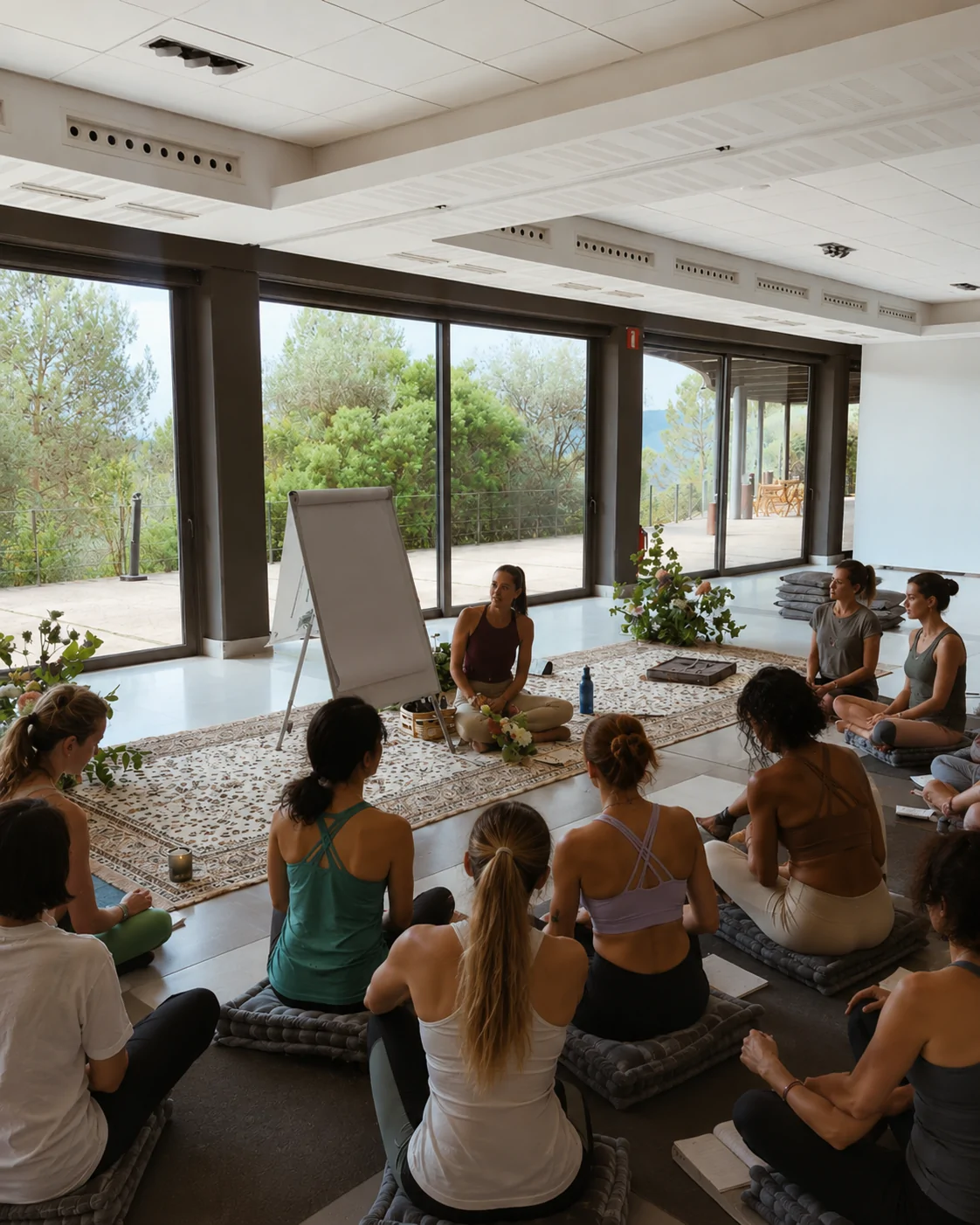
Rates for renting the whole house are on our retreat cost page, and group details are on the group retreat page.
A Sample 3-Day Private Wellness Retreat Itinerary
This outline suits a group of 8–12 people on a three-day, two-night break. Adjust the pace, timings and content to suit your group.
| Time | Day 1 | Day 2 | Day 3 |
|---|---|---|---|
| Morning | Travel and arrival | Yoga or breathwork, then breakfast | Gentle stretching or meditation, then breakfast |
| Late morning | Check in and settle in | Guided walk or forest bathing | Closing circle |
| Midday | Light lunch | Lunch | Brunch and departure |
| Afternoon | Welcome circle and intention setting | Free time: reading, massage, wild swimming | — |
| Late afternoon | Gentle yoga | Sauna and cold plunge | — |
| Evening | Welcome dinner | Dinner | — |
| Night | Sound bath or guided relaxation | Fireside conversation and an early night | — |
How Much Does a Private Group Wellness Retreat Cost?
Costs vary with location, season, group size and how much is included, so treat the figures below as typical ranges rather than fixed prices.
What makes up the budget
- Accommodation. Usually the largest single cost, whether priced per room or for exclusive hire of the whole venue.
- Food. Full-board catering, a private chef or self-catering with a grocery budget.
- Practitioners and activities. Yoga teachers, massage therapists, sound bath facilitators, guided walks.
- Travel and transfers. Train fares or flights, plus the transfer from the station or airport.
- Insurance and extras. Travel insurance, public liability insurance if you are running a paid retreat, and a contingency for small surprises.
Typical price ranges
- Accommodation with breakfast at a retreat venue typically ranges from around £180 to £450 per person per night.
- Ready-made wellness packages in the UK often start at roughly £475–£700 per person for a short stay.
- Exclusive hire of a large private house can run to several thousand pounds per week before catering and practitioners.
Why bigger groups pay less per person
Many costs are fixed: venue hire, a teacher’s fee, a minibus transfer. Divided among more people, they shrink per head, so a group of 12 usually pays noticeably less per person than a group of six in the same house. Don’t stretch the group beyond what the venue sleeps comfortably, though: shared rooms that nobody wanted can undo the benefit.
How to Plan a Private Group Retreat: Step by Step
- Define the purpose. Rest, fitness, reconnection, celebration or team strategy? One clear aim makes every later decision easier.
- Agree the group size. Eight to twelve people works well for an intimate retreat: big enough for group energy, small enough for everyone to be heard.
- Set a budget per person. Agree what is included and who pays for what before anyone commits.
- Choose dates and book early. Popular venues for group stays are often reserved four to six months ahead.
- Select the venue. Use the checklist above and ask for photos of the practice space and bedrooms, not just the exterior.
- Build the programme. Combine structured sessions with free time, and plan one or two anchor activities a day rather than a packed timetable.
- Sort food and dietary requirements. Collect them early, pass them to the chef or caterer and confirm in writing.
- Send a pre-retreat pack. About two weeks before arrival, share the schedule, travel details, a packing list and any house guidelines.
FAQ — frequently asked questions
Final Thoughts
A successful private group wellness retreat rests on three things: the right venue, a realistic budget and a programme with room to breathe. Book the whole place, keep the group small enough to stay connected, and leave as much space for rest as for activity.
Get in touch to check availability and talk through a programme built around your dates, group size and goals.
What we offer