The Best Solo Wellness Retreats in Europe for Singles: A Complete Guide
You’ve decided to book a solo wellness retreat in Europe. You’re ready. You’ve mentally packed your yoga mat and imagined the sound of waves somewhere warm. Then you open the booking page and see it: ‘single supplement: £350.’ Or you picture yourself at dinner, the only lone figure in a room of couples leaning into each other over candlelight. That specific anxiety is why half the people who want to book a solo wellness retreat in Europe don’t — at least not on the first attempt.
Here’s what those booking pages don’t tell you: the best wellness retreats in Europe are built for solo travellers. Not as an afterthought, but structurally. Communal dining tables where you sit with whoever’s there. Morning yoga classes where everyone arrived alone. A group of twenty people who all checked in on Sunday, all know nobody, and by Tuesday are recommending therapists to each other over dinner. At a well-run retreat, travelling alone is a feature, not a problem to manage.
This guide covers everything you actually need to make the decision and book with confidence: the best European destinations for solo wellness, which retreat type suits your specific goal, what a solo retreat genuinely costs in GBP — and what the first day actually feels like.
- Why It Works
- Retreat Types by Goal
- Destinations
- The Single Supplement
- What to Expect
- How Much It Costs
- How to Book
- What to Pack
- FAQ
- Quick-Start Checklist

The right setting does much of the transformation work on its own
Why Solo Wellness Retreats Work — and Why Europe Is Ideal
The structural reason solo travellers thrive at wellness retreats is simple: the programme does the social work for you. At a regular hotel, you eat alone and the day is unstructured. At a wellness retreat, you’re in a morning yoga class at 7am with twelve other guests, sharing breakfast at a communal table, and attending an afternoon workshop together. By the end of day one you have context — shared experience, something to talk about, a reason to sit with someone at dinner that isn’t desperation. It removes the part of solo travel that actually feels lonely.
Most retreat guests arrive alone. At a typical 20-person yoga retreat in Portugal, 60 to 70 per cent of guests are solo travellers. The social dynamic is nothing like a holiday resort where couples dominate. Everyone is there for the same reason: to switch off, eat well, move their body, and think more clearly. That shared purpose creates community faster than any other travel format.
Europe works specifically well for UK solo travellers: flight times are under three hours to Spain, Portugal, Italy and Greece. The retreat infrastructure is mature across all price ranges and formats. The climate gives you year-round options — Tenerife in January, Algarve in April, Austrian Alps in July, Peloponnese in October. And the price-to-quality ratio is considerably better than comparable retreats in Asia or the US once you factor in flights.
Choosing the Right Type of Retreat for Your Goal
The most common mistake first-time solo retreat bookers make is searching by destination before clarifying what they actually want from the week. Start with your goal, then choose your destination and retreat style.
| Your Goal | Best Retreat Type | What to Look For | Example Destinations | Budget (7 nights, GBP) |
|---|---|---|---|---|
| Complete burnout / stress reset | Medical spa or detox retreat | Structured programme, limited phone use, medical consultation on arrival | Austria, Germany | £2,500–£6,000 |
| Heartbreak / emotional reset | Emotional healing or holistic retreat | Group workshops, therapist access, journalling sessions | Greece (Peloponnese), Ibiza | £2,000–£5,000 |
| Fitness kick-start / weight loss | Fitness or bootcamp retreat | Daily movement, personal training, nutrition coaching | Spain (Alicante), Tenerife | £1,800–£4,500 |
| Deep solo work / inner exploration | Archetypal or self-guided retreat | Structured solitude, psychological framework, individual coaching | Latvia (Amatciems) | £600–£2,000 |
| Yoga deepening / spiritual exploration | Yoga or mindfulness retreat | Twice-daily yoga, meditation, optional workshops | Portugal (Algarve), Italy (Tuscany) | £800–£2,500 |
| Digital detox / slow down | Countryside or forest retreat | No WiFi zones, nature walks, spa access, minimal pressure | South Tyrol, Austrian Alps, Latvia | £1,500–£4,000 |
| First-time wellness curious | Boutique spa hotel with classes | Flexible schedule, no pressure, pool and spa | Mallorca, Algarve, Sardinia | £700–£2,000 |
A note on medical retreats: Austria and Spain lead for medical-grade wellness programmes — a different category from a yoga week. They involve medical assessments, blood tests, personalised treatment schedules, and therapeutic diets. Solo travellers do particularly well at them because the structured day leaves no room for the ‘what do I do now’ anxiety that sometimes hits in free-form retreat environments.

Solo wellness travel is one of the fastest-growing formats in European tourism
Best European Destinations for Solo Wellness Retreats
European wellness destinations are not interchangeable. Climate, retreat culture, price level, and the type of programme available vary significantly by country. Here’s what you actually need to know before choosing.
Latvia — for Solo Travellers Who Want to Go Deeper
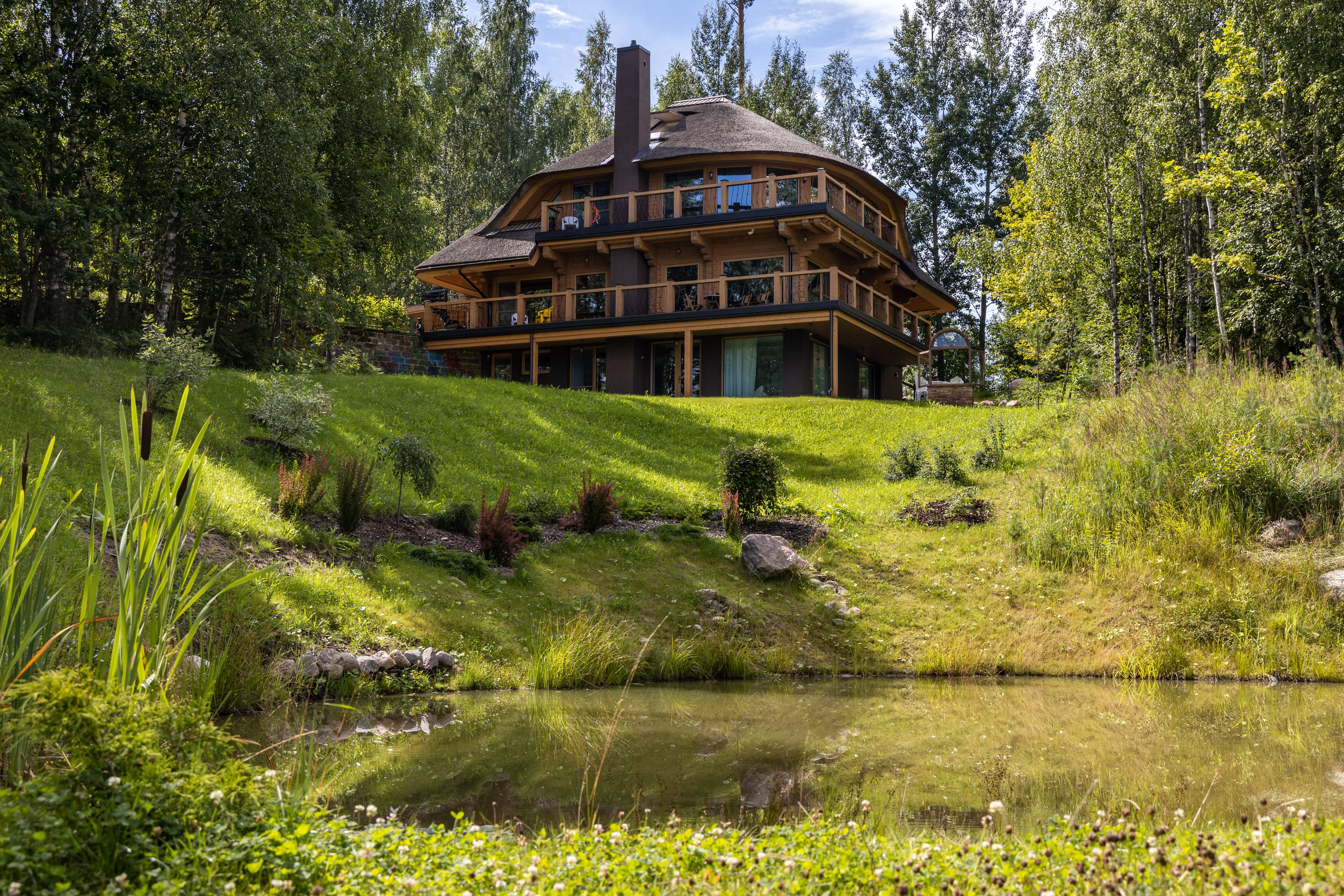
Narbuli Retreat House, Amatciems — forest, silence, and a lake at the foot of the hill
Narbuli Retreat House
A thatched-roof eco house perched above a lake in the Amatciems forest settlement. Nine rooms, each designed around a Jungian archetype. You’re matched to a room based on a pre-arrival conversation about what you’re carrying into the retreat.
Self-guided format. Maximum one other guest in the building. No single supplement — €180–330/night. 3 to 14 nights.
Latvia doesn’t appear on most wellness retreat lists, which is precisely what makes it worth considering. The country has the kind of unspoiled forest landscape — birch trees, still lakes, clean air — that does something useful to an overstimulated nervous system without requiring a long-haul flight to find it. Riga is a two-hour direct flight from London.
The format at Narbuli is self-guided: structured solitude rather than group wellness. Nine rooms each designed around one of the Jungian archetypes — Warrior, Magician, Shadow, Lover, and so on. Before you arrive, a 30–50 minute conversation matches you to the room whose energy addresses what you’re carrying. Optional daily video sessions with a specialist coach are available for those who want more active support.
Best season: May to September for lake swimming and outdoor walks; October for introspective autumn forest retreats. Price level: mid-range. Particularly strong for: deep solo work, digital detox, Jungian and psychological retreat approaches, travellers who find group retreat dynamics draining rather than energising.
Spain — the Most Developed Wellness Market in Europe
Spain has the most mature and diverse wellness retreat landscape on the continent. Alicante is home to some of Europe’s most recognised medical wellness clinics, with programmes that are genuinely medical, internationally accredited, and priced at around £4,000 to £8,000 for a week. For something more intimate, Malaga and the surrounding region offer small boutique retreats of 15 to 20 rooms where the community is tight, social dynamics are easy, and solo guests rarely feel lost in a crowd.
Best season: March to May and September to November. Price level: mid to premium. Particularly strong for: detox retreats, medical spas, fitness programmes.
Portugal — the Fastest-Growing Wellness Destination
Portugal has become the go-to choice for solo wellness travel on a mid-range budget. The Algarve and Alentejo regions host a high concentration of small boutique retreats, typically 10 to 25 guests, that are structurally excellent for solo travellers. Several Algarve properties have built strong reputations specifically for solo-friendly programming, with communal dining built into the daily structure and a guest mix that typically runs 65 to 70 per cent solo travellers.
Best season: April to June. Price level: budget-friendly to mid-range. Particularly strong for: yoga retreats, holistic wellness, first-timers on a budget.
Italy — Space, Quality, and the Slow Retreat
Italy does exceptionally well at the slow, luxurious version of wellness: thermal baths in Tuscany, mountain spa retreats in South Tyrol, walking programmes through the countryside. South Tyrol in particular has developed a reputation for solo-friendly alpine retreat programming: structured enough to give the week shape, spacious enough to have real solitude when you want it.
Best season: May to June and September. Price level: mid to premium. Particularly strong for: spa and thermal wellness, digital detox, experienced retreat-goers.
Greece — Emotional Healing and Serious Holistic Programmes
Greece punches above its weight in the high-end holistic retreat category. The Peloponnese region hosts some genuinely exceptional solo wellness properties — communal dining designed around conversation, coherent wellness philosophies, and consistently high solo guest proportions. Programmes typically run from £2,500 to £5,000 for a week at the premium end. The Greek islands offer a good selection of small yoga and meditation retreats in the £800 to £2,000 range.
Best season: May to June and September to October. Price level: mid to premium. Particularly strong for: emotional healing, holistic and Ayurvedic programmes.
Austria — Medical-Grade and Year-Round
If a serious health intervention is the goal — not a wellness week but a genuine physiological reset — Austria is Europe’s answer. Lake Wörthersee and the surrounding alpine region host some of the continent’s most rigorous medical wellness retreats: Mayr Cure programmes that combine medical diagnostics, gut health protocols, therapeutic diet, and daily treatments in a setting of remarkable calm. These work particularly well for solo travellers because the programme structure is so tight that there’s no unscheduled downtime.
Best season: year-round. Price level: premium (£4,000 to £10,000+ for 7 to 10 nights). Particularly strong for: burnout recovery, gut health, serious medical wellness.
Quick comparison:
| Destination | Best Retreat Type | Best Season | Price Level | Ideal For |
|---|---|---|---|---|
| Latvia | Deep solo work, digital detox | May–Oct | Mid-range | Introversion, depth, Jungian approach |
| Spain | Detox, medical spa, fitness | Mar–May, Sep–Nov | Mid–Premium | Serious programmes, year-round warmth |
| Portugal | Yoga, holistic, first-timers | Apr–Jun | Budget–Mid | Value, boutique, solo-friendly culture |
| Italy | Spa, digital detox, slow wellness | May–Jun, Sep | Mid–Premium | Experienced travellers, beauty, space |
| Greece | Holistic, emotional healing | May–Jun, Sep–Oct | Mid–Premium | Depth, healing, Ayurveda |
| Austria | Medical spa, Mayr Cure | Year-round | Premium | Burnout, gut health, structure |

Communal dining is where the day’s experiences get processed — and friendships begin
The Single Supplement — What It Is and How to Avoid It
The single supplement is the elephant in the room for every solo wellness traveller, and every competitor article ignores it completely. Here’s the honest version.
A single supplement is an additional charge — typically 20 to 60 per cent on top of the per-person rate — that solo travellers pay to occupy a room designed for two people alone. A retreat priced at £1,800 per person per week with a 30 per cent single supplement becomes £2,340 for a solo traveller.
Strategies that work:
- Book retreats that advertise ‘single supplement free’ or ‘solo-friendly’ explicitly. Some retreats — especially smaller boutique properties in Portugal, Greece, and Latvia — have a fixed per-person rate that applies regardless of room occupation. Narbuli Retreat House in Latvia, for instance, prices by the night with no supplement applied.
- Ask the retreat directly before booking. A polite email asking whether the supplement can be waived in the dates you’re considering will often produce a positive response, particularly in shoulder season.
- Book through a specialist solo travel or wellness agency. Agencies like Healing Holidays and Wellness Holiday Boutique have negotiated agreements with certain retreats.
- Choose smaller boutique retreats with 15 to 25 guests. At this scale, many properties have priced single occupancy into their standard rate.
- Travel in shoulder season — April to May and October. Off-peak travel correlates directly with supplement flexibility.
- Look for retreats with dedicated single rooms. Some properties have designed single-occupancy rooms into their layout specifically.
💡 If a retreat’s supplement policy is opaque, that’s a red flag. A retreat that’s genuinely solo-friendly will tell you clearly what the solo rate is and whether there’s flexibility.
What to Actually Expect as a Solo Guest
This is the section every anxiety-ridden first-time solo retreat booker needs before they click away. Let’s address the specific fears directly.
Will I feel lonely? At a well-run retreat, rarely. The shared programme creates natural connection — morning yoga, communal meals, afternoon workshops. Most guests arrive alone. By day two, you’ll have a table of familiar faces and a sense of the group dynamic.
Is dining alone awkward? Not at properly solo-friendly retreats. The best ones have communal dining tables by design — you sit with whoever is there. The Peloponnese in Greece and the Algarve in Portugal are particularly good regions for this done well.
Will I be the only single person? At most European wellness retreats, 50 to 70 per cent of guests are solo travellers, especially at structured programmes. You are not unusual.
What if I want solitude? You get it whenever you want it. A good retreat gives you the option to skip group activities without social pressure. The spa, meditation garden, pool, and your room are always available.
Is it safe for women travelling alone? European wellness retreats are among the safest environments for solo female travel. Guest lists are controlled. Staff are on-site throughout. Alcohol is minimal or absent. The guest mix at most yoga or holistic retreats is overwhelmingly women.
A Typical Day at a Solo Wellness Retreat
How Much Does a Solo Wellness Retreat in Europe Cost?
Every other article on this topic either avoids pricing entirely or waves at ‘it varies’. Here are real 2026 figures in GBP, including what each tier actually delivers.
| Retreat Tier | Duration | Typically Includes | Price Range (GBP, solo, per stay) |
|---|---|---|---|
| Budget / yoga retreat | 5–7 nights | Accommodation, meals, daily yoga/meditation, group activities | £500–£1,200 |
| Mid-range boutique retreat | 5–7 nights | Accommodation, all meals, programme, 1–2 treatments included | £1,200–£2,500 |
| Premium wellness hotel | 5–7 nights | Luxury accommodation, full board, tailored programme, daily treatments | £2,500–£5,000 |
| Medical spa (Austria, Spain) | 7–10 nights | Medical assessment, personalised programme, treatments, all meals | £4,000–£10,000+ |
Season:Summer surcharges of 15–30% at coastal retreats
Room type:Garden-view vs sea-view can swing £400–£800 per week
Single supplement:Adds 20–50% if not specifically avoided
The most cost-effective window to book in Southern Europe is October and November, when occupancy drops and resorts actively compete for bookings. A premium boutique retreat that charges £2,800 in May might come down to £2,100 in October with a supplement waiver included.
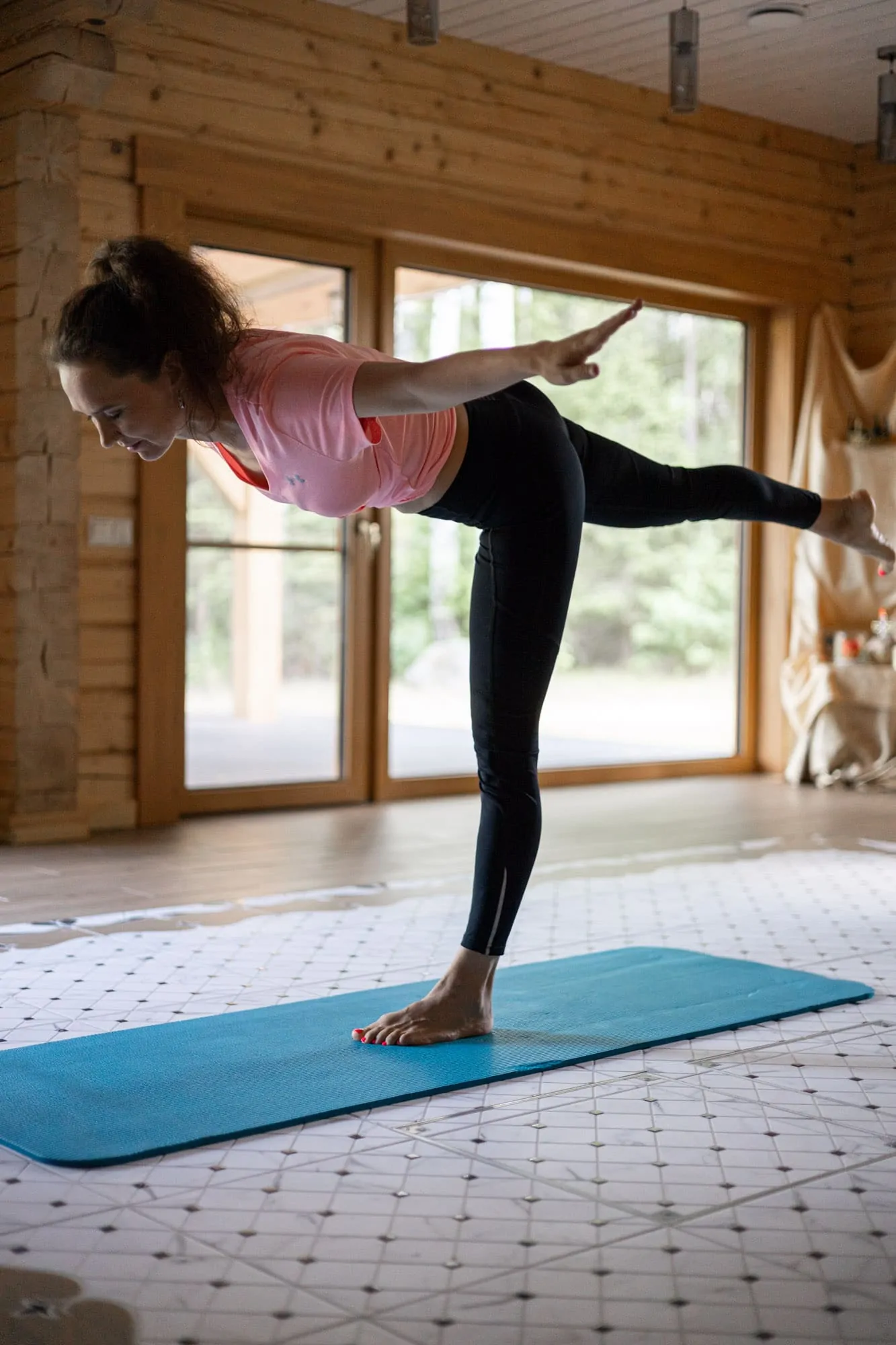
Nature walks and forest bathing are part of the programme at many European retreats
How to Book — Practical Tips for First-Timers
Booking a solo wellness retreat involves a few decisions that hotel booking doesn’t prepare you for. Here’s the sequence that avoids the common mistakes.
- Define your non-negotiables first. Private room, dietary requirements, mobility considerations, and whether you need WiFi or are prepared to go without.
- Choose your booking route. Booking directly with the retreat gives you the best price and a direct relationship with the team. Booking through a specialist agency like Healing Holidays, Wellness Holiday Boutique, or BookRetreats gives you easier comparison and better cancellation support.
- Ask three questions before you commit: Is there a single supplement, and can it be waived? What percentage of guests typically travel solo? Is there a communal dining arrangement?
- Read reviews specifically from solo travellers. Filter for reviewers who mention arriving alone, and weight those comments more heavily than the overall star rating.
- Book 8 to 12 weeks ahead for popular retreats in Spain and Portugal between March and June and in September and October. Small retreats with 15 to 25 guests fill on this timeline.
What to Pack for a Solo Wellness Retreat
Most retreats provide robes, slippers, towels, and yoga mats. What you do need:
- Yoga and movement wear: two or three sets. Many retreats run morning and evening sessions, and fabric gets damp in warm weather.
- A journal and pen. Almost every wellness retreat incorporates reflective writing in some form.
- Layers for evenings. Even in Spain and Portugal in spring and autumn, evenings can be cool. A light merino cardigan is ideal.
- A clear plan for your phone. Many retreats have phone-free zones. Decide before you arrive how available you want to be.
- A written health summary. Medical retreats will ask for health history, current medications, and any conditions on arrival.
- Light reading, not work. Bring one or two books that have nothing to do with productivity.
- Comfortable walking shoes. Most European wellness retreats incorporate daily walks. Trail shoes or supportive trainers are more useful than sandals.
FAQ — Solo Wellness Retreats in Europe
Ready to Book? Your Solo Wellness Retreat Checklist
Solo wellness retreats in Europe in 2026 offer something genuinely difficult to find elsewhere: structured rest, built-in community, and the particular calm that comes from being around other people who are all doing the same thing as you. The anxiety of booking alone is almost always disproportionate to the experience.
Looking for a Solo Retreat That Truly Gets It?
Narbuli Retreat House in Latvia offers self-guided solo retreats from 3 to 14 nights in an archetypal forest house. No single supplement. No group dynamics. Just you, the forest, and a programme built around what you actually need.

What we offer